An executive summary is your document’s powerhouse, condensing a comprehensive report, business plan, or project proposal into a concise, impactful overview. It’s the first—and sometimes only—chance to grab decision-makers’ attention, enabling them to grasp key findings and recommendations instantly. This blueprint will guide you through crafting a compelling summary that unlocks swift, informed decisions and drives your objectives forward, complete with actionable examples and templates.

The Core Purpose: Why Your Executive Summary is the Most Crucial Page
In any business document, the executive summary is arguably the most critical page. It’s the gateway that determines whether your audience—be it investors, stakeholders, or your management team—will invest their precious time in reading the full document. A well-crafted summary respects their time and gets straight to the point.
What is an Executive Summary, Really?
An executive summary is a brief, high-level overview of a longer document. Its purpose is to distill the most critical information, such as the problem, proposed solution, key findings, and recommendations, into a digestible format. Think of it as a standalone document; if someone only reads the executive summary, they should still walk away with a clear understanding of the entire report’s core message and objectives.
Saving Time and Driving Decisions for Stakeholders
The primary audience for this summary is busy executives and decision-makers who need to make informed choices quickly and efficiently. They don’t have time to sift through dozens of pages of data. The summary provides them with the essential takeaways required to approve a project, fund a business plan, or act on a report’s recommendations. It is a vital communication tool designed for efficiency and action.
Executive Summary vs. Abstract: A Key Distinction You Can’t Ignore
While both an executive summary and an abstract provide a condensed version of a larger document, their audience and purpose are fundamentally different.
- Audience: An abstract is written for an academic audience to help researchers determine if a paper is relevant to their work. An executive summary is tailored for a business audience (executives, investors) to facilitate decision-making.
- Content: An abstract is a descriptive overview of a research paper’s content. An executive summary is persuasive; it not only summarizes but also makes a case for the recommendations and proposed actions within the document.
- Length: Abstracts are typically very short, often just a single paragraph (around 150-250 words). An executive summary can be longer, sometimes one to two pages, depending on the document’s complexity.
Understanding this distinction is crucial for crafting a document that meets the expectations of your intended readers.
The Blueprint: How to Write an Executive Summary Step-by-Step
Crafting an effective executive summary is a structured process. By following these steps, you can ensure your summary is clear, concise, and compelling.
Step 1: Begin with the End – Write it Last
One of the most common pieces of advice is also the most effective: write the executive summary after you have completed the entire report or proposal. This approach ensures you have a complete understanding of the content and can accurately extract the most critical highlights, key findings, and final recommendations.
Step 2: Identify Your Audience and Key Message
Before writing a single word, clearly define who you are writing for. Are they investors focused on ROI? Are they project managers concerned with timelines and resources? Tailor the language, tone, and content to address their specific priorities and pain points. Your key message should be a sharp, focused statement that encapsulates the core purpose of your document.
Step 3: Outline the Key Elements and Structure
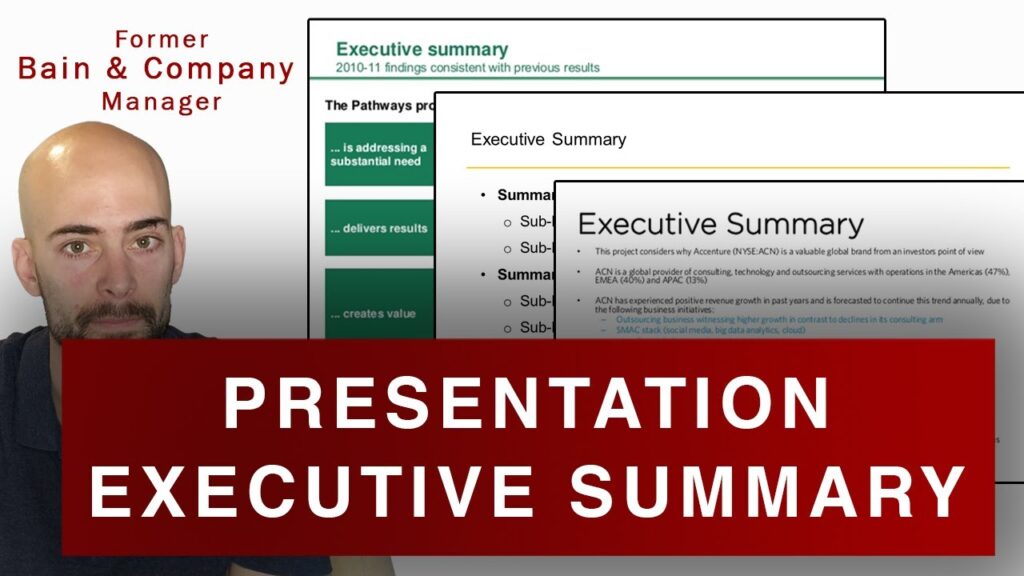
A logical executive summary structure guides the reader smoothly through your argument. While the exact components can vary, a standard format includes the problem, the solution, key findings, and recommendations. Following the order of the main report is a common and effective practice.
Step 4: Draft Each Section with Precision and Clarity
Write each component of the summary with a focus on clarity. Use strong, active verbs and avoid jargon or overly technical language. Each sentence should add value and contribute to the overall message. The goal is to convey information quickly and without ambiguity.
Step 5: Edit Ruthlessly for Conciseness and Impact
Brevity is paramount. Once you have a draft, review it multiple times to eliminate redundant phrases, unnecessary words, and vague statements. Every word counts. Ask yourself if a sentence is essential to the reader’s understanding. If not, cut it.
Anatomy of an Effective Executive Summary: Key Components to Include
A powerful executive summary contains several key elements that work together to tell a compelling story. These components are the building blocks of a persuasive argument.
The Problem Statement: Hooking Your Reader Immediately
Start by clearly and concisely defining the problem, need, or opportunity your document addresses. This section should immediately grab the reader’s attention by highlighting a significant pain point or a valuable opportunity, making it clear why the rest of the document is important.
The Proposed Solution & Value Proposition
After defining the problem, present your proposed solution. This is where you introduce your project, product, or strategy. Crucially, you must also explain its value proposition—what makes your solution unique, effective, and superior to alternatives?
Market Analysis & Key Findings at a Glance
Briefly summarize your market analysis and the most critical findings from your research. This section provides the evidence that supports your claims. Use quantifiable data and key statistics to add credibility to your argument and demonstrate a clear understanding of the market landscape.
Financial Projections & Implementation Plan Highlights
For business plans or project proposals, including a high-level overview of financial projections is essential. Mention key figures like projected revenue, costs, and return on investment. Also, briefly touch upon the implementation plan, highlighting major milestones and the timeline to show that your plan is actionable.
The Conclusion and Clear Recommendations
Conclude the summary with a powerful statement that reinforces the importance of your proposal. This section must clearly state the recommendations or the specific action you want the reader to take. Whether it’s to approve funding, greenlight a project, or adopt a new strategy, the call to action should be direct and unambiguous.
See it in Action: Powerful Executive Summary Examples for Any Scenario
Theory is important, but seeing real-world applications makes it concrete. Here are some condensed examples to illustrate the structure in different contexts.
Executive Summary for a Business Plan: The Classic Approach
- Problem: The market for sustainable home goods is growing, but consumers lack affordable, eco-friendly cleaning products that are also highly effective.
- Solution: “EcoClean Innovations” will launch a line of plant-based, biodegradable cleaning products that outperform competitors on both price and cleaning power.
- Market: The target market is environmentally conscious millennials, a demographic representing a $15 billion market opportunity.
- Financials & Ask: We project $2M in revenue by Year 3. We are seeking $250,000 in seed funding to finalize production and launch a targeted marketing campaign.
- Recommendation: Approve funding to capture a first-mover advantage in this rapidly expanding niche.
Project Proposal Executive Summary: Getting the Green Light
- Problem: Our current CRM system is outdated, leading to a 15% decrease in sales team efficiency and frequent data entry errors.
- Solution: We propose implementing a new, cloud-based CRM system (“ConnectSphere”) to automate workflows and provide real-time analytics.
- Key Benefits: This implementation will increase sales productivity by an estimated 25%, improve data accuracy, and enhance customer relationship management.
- Implementation: The project will be rolled out in three phases over six months with a total budget of $75,000.
- Recommendation: Approve the project and budget to modernize our sales infrastructure and drive revenue growth.
Executive Summary Report Example: Communicating Critical Insights
- Purpose: This report analyzes the Q3 customer feedback data to identify key trends in customer satisfaction.
- Key Findings: The analysis reveals that while overall satisfaction remains high (85%), there is a 20% increase in complaints related to product delivery times.
- Analysis: The root cause is an inefficient logistics process managed by our third-party provider. This issue poses a significant risk to customer retention.
- Recommendation: We recommend forming a task force to renegotiate terms with the current logistics provider or identify an alternative partner by the end of Q4.
Pro Tips for a Persuasive Executive Summary
Beyond the structure and components, a few pro tips can elevate your summary from good to great.
How Long Should an Executive Summary Be? The Golden Rule
There is no single magic number, but a general rule is to keep the executive summary to about 5-10% of the length of the main document. For most reports and proposals, this translates to one or two pages. The ultimate goal is to be comprehensive yet concise enough to be read in just a few minutes.
Adopting the Right Format and Tone
The executive summary format should be professional and easy to scan. Use short paragraphs, bullet points, and clear headings to break up the text. The tone should be confident, objective, and persuasive. At LIEN MMO, we advise clients to maintain a professional voice that builds credibility and trust with the reader.
Leveraging Templates for Efficiency (Word, PPT Slide)
You don’t have to start from scratch. Using an executive summary template can save time and ensure you include all the necessary components. Whether you need a word template for a detailed report or a summary slide template for a presentation, these tools provide a solid foundation. Many resources offer templates for business plans, project proposals, and marketing plans.
Mastering the executive summary is not just a writing skill; it’s a strategic tool for effective communication and persuasion in business. By following this blueprint, you can transform complex information into a clear, compelling narrative that respects decision-makers’ time and moves them to action. This structure ensures your key messages are understood, your recommendations are considered, and your goals are achieved with greater efficiency and impact.
Ready to create an executive summary that gets results? Download our free, customizable Executive Summary Template now and start making your best impression on investors, stakeholders, and decision-makers today!