An executive summary is more than just a brief overview; it’s the most critical component for driving strategic decisions. For busy decision-makers, it’s often the only document they read. A well-crafted summary doesn’t just inform; it persuades. This guide provides a step-by-step approach to crafting a compelling executive summary that captures attention, presents a clear value proposition, and persuades stakeholders to act, ensuring your proposals and reports achieve their intended strategic impact.

Why Your Executive Summary is the Deciding Factor for Stakeholders
In today’s fast-paced business environment, time is the most valuable asset for executives, investors, and managers. They face a constant barrage of information and need to make critical decisions quickly. This is where a powerful executive summary becomes indispensable. It’s not just a formality; it’s the gateway to your entire document, be it a business plan, project proposal, or in-depth report.
What is an Executive Summary? A High-Level Overview for Decision-Makers
An executive summary is a concise, high-level overview of a longer document. Its purpose is to distill the most crucial information—the core problem, the proposed solution, key findings, and recommendations—into a digestible format. Imagine it as an “elevator pitch” on paper; it must quickly convince the reader that the full document is worth their time and consideration. For stakeholders, it provides a snapshot that allows them to grasp the essence of your proposal without reading every page.
The Strategic Purpose: How a Great Summary Saves Time and Influences Key Decisions
The primary purpose of an executive summary is efficiency. It respects the reader’s limited time by presenting the main points upfront, enabling them to make a swift, informed judgment. A persuasive summary can secure buy-in, greenlight a project, or attract investment before the reader even gets to the second page of the full report. It frames the narrative and sets the tone, guiding the decision-maker toward your desired outcome.
At LIEN MMO, we’ve seen firsthand how a well-structured summary can be the catalyst for action. By focusing on strategic insights and a clear value proposition, you empower leaders to act confidently.
The Critical Difference: Executive Summary vs. Abstract vs. Introduction
While they may seem similar, these three components serve distinct functions.
- Introduction: Sets the scene for the entire document. It provides background context and outlines the structure of the report but does not give away the conclusions or recommendations.
- Abstract: Typically found in academic or research papers, an abstract is a short summary of the paper’s content, including its purpose, methods, results, and conclusions. It’s descriptive, not persuasive.
- Executive Summary: This is inherently persuasive. It not only summarizes but also analyzes and recommends a course of action. It’s a standalone document designed to facilitate strategic decision-making.
Crafting the Narrative: Key Components of an Executive Summary That Wins Approval
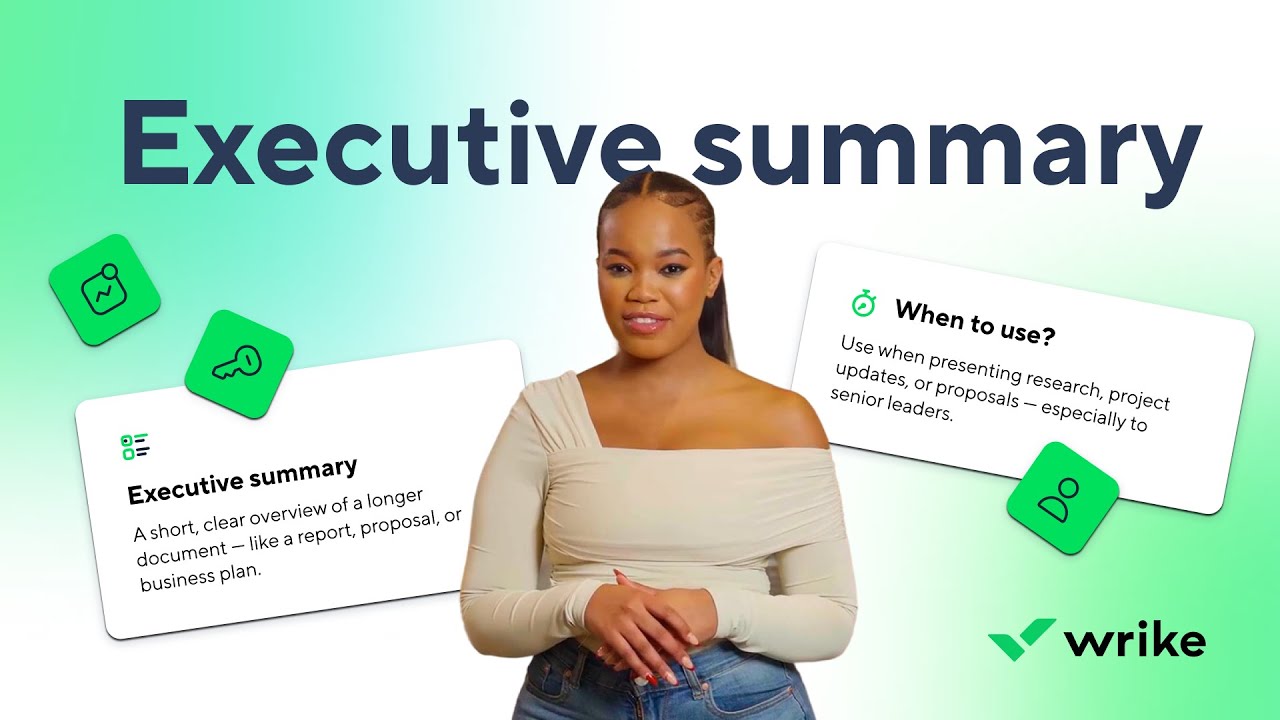
To be effective, an executive summary must tell a compelling story. It should follow a logical structure that guides the reader from a problem to a solution, backed by evidence and culminating in a clear call to action. The essential components include the problem statement, proposed solution, key findings, financial implications, and recommendations.
The Problem Statement: Clearly Defining the “Why” to Grab Attention
Start by clearly articulating the problem, need, or opportunity. This is your hook. A powerful problem statement resonates with the reader’s own challenges and immediately establishes the relevance of your document. It should be specific, concise, and compelling, making it clear why action is needed now.
The Proposed Solution & Objectives: Presenting a Clear and Compelling Path Forward
After defining the problem, present your solution. What do you propose to do, and what are the specific, measurable objectives you aim to achieve? This section should outline the core of your proposal, focusing on the “what” and “how.” It should instill confidence that you have a well-thought-out plan to address the issue effectively.
Key Findings & Market Analysis: Providing the Evidence to Build Trust
To be persuasive, your solution needs to be backed by evidence. This section should summarize the most critical findings from your research or market analysis. Use key data points, statistics, and insights to build credibility and demonstrate that your proposal is grounded in reality. This is where you prove there’s a genuine market need or a solid basis for your conclusions.
Financial Implications and ROI: Justifying the Investment for Investors and Managers
Decision-makers, especially investors and managers, need to understand the financial impact. Provide a concise overview of the costs, projected revenues, and, most importantly, the potential return on investment (ROI). This section answers the critical question: “Is this a worthwhile investment?” Be realistic and transparent to build trust.
Recommendations and Conclusion: Guiding Decision-Makers to the Right Choice
Conclude with clear, actionable recommendations. What specific steps do you want the reader to take? Whether it’s approving a budget, funding a project, or adopting a new strategy, the next steps should be unambiguous. This final part of your summary should reinforce the value proposition and create a sense of urgency.
A Step-by-Step Guide to Writing an Effective Executive Summary
Writing an effective executive summary is a process of refinement and strategic thinking. Follow these steps to ensure your summary is clear, compelling, and drives action.
Step 1: Synthesize the Core Message After the Main Document is Complete
One of the most common mistakes is writing the executive summary first. To create an accurate and powerful overview, you must write it last. Once the entire business plan, report, or proposal is complete, you will have a comprehensive understanding of all the key findings, data, and recommendations, allowing you to extract the most essential highlights.
Step 2: Structure Your Narrative with an Executive Summary Template
Using a structured approach ensures you cover all the critical components. A reliable executive summary template can provide a framework to organize your thoughts logically. The flow should generally be:
- Opening: State the purpose of the document.
- Problem: Define the key challenge or opportunity.
- Solution: Briefly describe your proposed solution.
- Value & Impact: Highlight key findings and financial benefits (ROI).
- Conclusion: State your recommendations or call to action.
Step 3: Write a Compelling Opening and a Strong Conclusion
The first sentence must grab the reader’s attention and state the core purpose of your document. Avoid slow, generic introductions. The conclusion should be equally strong, summarizing the key takeaway and clearly stating what you need from the reader. End with confidence and a clear sense of purpose.
Step 4: Refine for Clarity, Conciseness, and Impact (How Long Should it Be?)
An executive summary should be as brief as possible while still conveying the necessary information. There is no strict rule, but a common guideline is that it should be about 5-10% of the length of the main document. For most reports and proposals, this means one to two pages is ideal. The key is to be ruthless in your editing. Cut jargon, eliminate redundant phrases, and ensure every sentence adds value.
Best Practices and Examples for Driving Strategic Action
Beyond structure, the language, tone, and data you use are critical. Here are some tips and executive summary examples to guide you.
Tips for Writing a Persuasive Executive Summary: Language, Tone, and Data
- Know Your Audience: Tailor the language and focus to who will be reading it. An investor cares most about financial returns, while a project manager may focus more on objectives and timelines.
- Use a Professional and Confident Tone: Your writing should convey authority and belief in your proposal.
- Quantify When Possible: Use numbers and data to add weight to your claims. “Increase market share by 15%” is more powerful than “significantly increase market share.”
- Focus on Benefits, Not Features: Instead of describing what your product does, explain the value it delivers to the customer or organization.
- Ensure it Stands Alone: The summary must make sense on its own, without requiring the reader to consult the main document for context.
Executive Summary Example for a Business Plan
Problem: The rapidly growing market for sustainable home goods lacks a brand that combines eco-friendly materials with premium design and affordability.
Solution: “GreenNest” will offer a direct-to-consumer line of stylish, sustainable home decor and essentials.
Market Analysis: The target market is a $20B industry, with 65% of millennial consumers prioritizing sustainability in their purchasing decisions.
Financials: We project $2M in revenue by Year 3 with a 40% gross margin. We are seeking $500,000 in seed funding to finance initial inventory and marketing.
Recommendation: We request a meeting to discuss this investment opportunity further.
Executive Summary Example for a Project Proposal
Problem: Our current Customer Relationship Management (CRM) system is outdated, causing an average of 8 hours of lost productivity per sales representative per week and a 15% lag in lead follow-up time.
Solution: We propose implementing the “ConnectFlow CRM,” a modern, AI-driven platform tailored to our sales process.
Key Benefits: This implementation will streamline workflows, automate data entry, and is projected to increase sales team efficiency by 30% and improve lead conversion rates by 20% within the first year.
Financial Implications: The total project cost is $150,000, with an expected ROI of 250% over three years from increased sales and productivity gains.
Recommendation: We request approval of the project budget and timeline to begin implementation by Q2.
Executive Summary Example for a Formal Report
Purpose: This report analyzes the Q3 customer churn data to identify primary causes and recommend retention strategies.
Key Findings: Our analysis reveals that 58% of customer churn is attributed to poor onboarding experiences, followed by a lack of proactive customer support (25%).
Conclusion: The current reactive support model is insufficient for retaining new customers.
Recommendations: We recommend two key actions: 1) Overhaul the customer onboarding process with a new interactive tutorial series. 2) Implement a proactive customer check-in program for all accounts in their first 90 days. These initiatives are projected to reduce churn by 40% over the next six months.
Ultimately, writing an executive summary that drives strategic decisions is about transforming information into insight. By focusing on the core problem, solution, and value proposition, you equip leaders to make informed choices quickly and confidently. A well-crafted summary doesn’t just summarize; it persuades, clarifies, and becomes the catalyst for action, ensuring your most important ideas get the traction they deserve and lead to tangible business outcomes.
Ready to transform your reports into decision-driving tools? Download our free Executive Summary Template and start crafting compelling summaries today!