
Are you struggling to turn website visitors into loyal customers? Many businesses attract traffic but fail to convert it into revenue. A marketing funnel is the strategic roadmap that guides potential customers from their first interaction with your brand to their final purchase and beyond. Understanding and optimizing this journey is the key to unlocking sustainable growth, eliminating wasted marketing spend, and building a predictable pipeline of qualified leads ready to buy.
What is a Marketing Funnel and Why is it Crucial for Your Business?
Understanding the core concept of the marketing funnel is the first step toward mastering customer acquisition. It’s a foundational model that helps you visualize and structure your marketing efforts effectively.
A Simple Definition: The Customer Journey Visualized
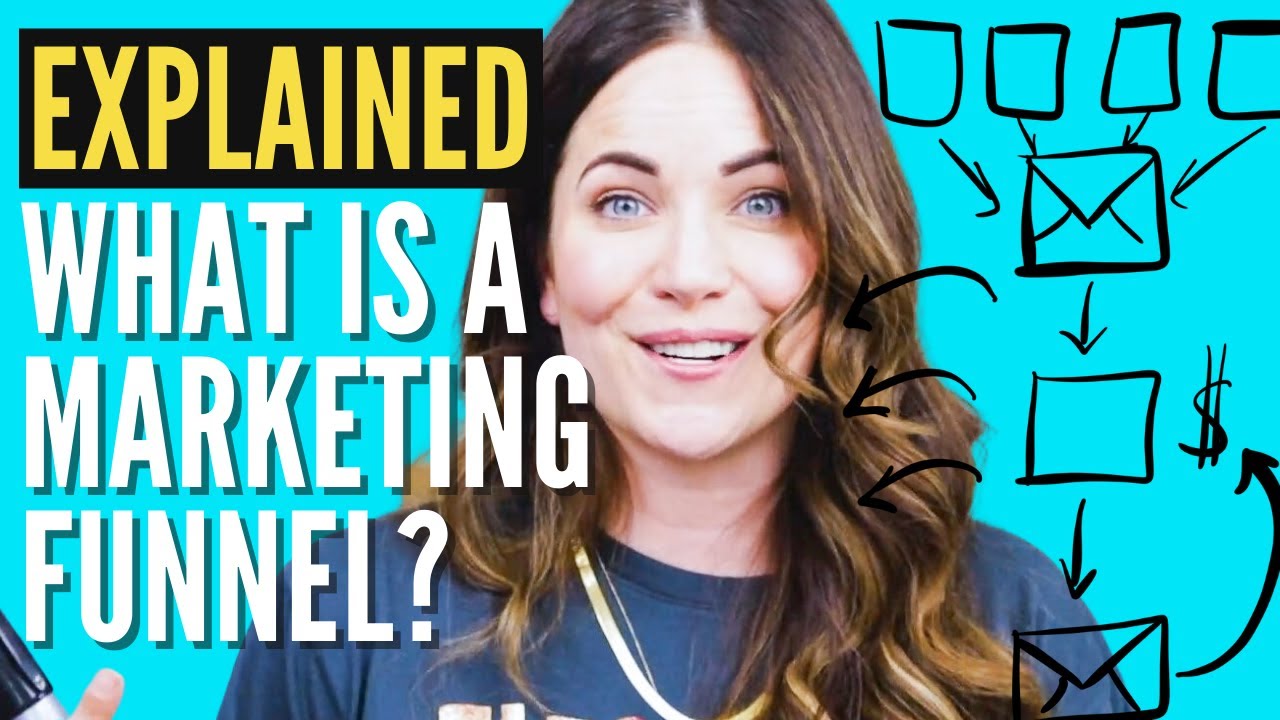
At its core, a marketing funnel—also known as a purchase funnel—is a model illustrating the theoretical journey a potential customer goes through, from initial brand awareness to the final purchase. The “funnel” shape represents the decreasing number of people at each stage; you start with a large audience at the top, but only a fraction become customers at the bottom. The primary goal is to make this funnel as efficient as possible.
Beyond Theory: How a Funnel Solves Leaky Marketing and Boosts ROI
Without a structured funnel, your marketing efforts can feel random and disconnected, like pouring water into a leaky bucket. A well-defined marketing funnel provides a clear framework to guide your strategy. It helps you identify where you’re losing potential customers, allowing you to plug the leaks with targeted content and strategies. This targeted approach ensures you’re delivering the right message at the right time, which significantly boosts your return on investment (ROI).
Marketing Funnel vs. Sales Funnel: Clarifying the Key Differences and Synergies
The terms “marketing funnel” and “sales funnel” are often used interchangeably, but they represent different, albeit connected, parts of the customer journey. The marketing funnel is responsible for generating awareness, capturing interest, and nurturing leads (MQLs). Once a lead is deemed ready for a direct sales approach (becoming an SQL), they are passed to the sales funnel, which focuses on the final steps of the purchase, like demos, negotiations, and closing the deal. They work in synergy to create a seamless customer experience.
The 4 Core Stages of the Marketing Funnel (From Awareness to Advocacy)

The traditional marketing funnel is often broken down into several key stages. While models vary, the most common framework follows four distinct phases, from Top of the Funnel (TOFU) to the Bottom of the Funnel (BOFU) and beyond. Understanding the different marketing funnel stages and examples is crucial for developing a comprehensive strategy.
Stage 1: Awareness (TOFU) – Turning Strangers into Visitors with SEO and Content Marketing
This is the top of the funnel, where the primary goal is brand awareness. At the awareness stage, potential customers are experiencing a problem or have a need and are searching for answers and information. Your goal is to attract their attention and introduce your brand as a helpful resource.
- Strategies: Content marketing (blog posts, articles, infographics), Search Engine Optimization (SEO), social media marketing, and advertising.
- Content Focus: Educational and informational content that addresses common pain points without a hard sell.
Stage 2: Consideration (MOFU) – Converting Visitors into Leads with Case Studies and Webinars
Once a prospect is aware of your brand, they move into the Middle of the Funnel (MOFU), or the consideration stage. Here, they are actively evaluating different solutions to their problem. Your objective is to build trust and position your brand as the best choice. This is where you focus on lead generation.
- Strategies: In-depth content like case studies, webinars, free trials, and detailed guides. Email marketing is crucial for lead nurturing.
- Content Focus: Content that showcases your expertise and the value proposition of your solution.
Stage 3: Conversion (BOFU) – Nudging Leads into Customers with Demos and Strong Offers
At the Bottom of the Funnel (BOFU), the prospect is ready to make a purchase decision. They have done their research and are comparing the final options. Your goal here is to provide the final nudge they need to choose you.
- Strategies: Product demos, free trials, special offers, customer testimonials, and compelling calls to action (CTA).
- Content Focus: Content that highlights your unique selling points, builds trust, and makes the purchase process as frictionless as possible.
Stage 4: Loyalty & Advocacy – Transforming Customers into Brand Evangelists
The funnel doesn’t end at the purchase. The post-purchase stage is critical for customer retention and building brand loyalty. A happy customer can become a repeat buyer and, even better, a brand advocate who promotes your business through word-of-mouth.
- Strategies: Excellent customer service, loyalty programs, personalized email follow-ups, and encouraging reviews.
- Content Focus: Content that helps customers get the most out of their purchase and makes them feel valued.
How to Create a High-Converting Marketing Funnel From Scratch: A 5-Step Guide

Building a marketing funnel requires a strategic, step-by-step approach. It’s about understanding your audience deeply and creating a journey that meets their needs at every turn.
Step 1: Define Your Target Audience and Buyer Personas
You cannot build an effective funnel without knowing who you’re building it for. Start by creating detailed buyer personas. Research your target audience’s demographics, pain points, motivations, and where they spend their time online. This insight will inform every other step of the process.
Step 2: Map the Customer Journey and Identify Key Touchpoints
With your personas defined, map out the path they take from awareness to purchase. A customer journey map marketing funnel helps you visualize all the customer touchpoints where they interact with your brand. This could include your website, social media channels, email newsletters, and paid ads.
Step 3: Create Valuable Content for Each Stage of the Funnel
Develop a content plan that aligns with each stage of the funnel. For TOFU, create blog posts answering common questions. For MOFU, produce detailed webinars or case studies. For BOFU, craft compelling landing pages and offers. The key is to provide value and answer their specific questions at each phase.
Step 4: Drive Traffic with a Full-Funnel Marketing Strategy (SEO, Social Media, Ads)
Once your content is ready, you need to drive traffic to it. A full-funnel marketing strategy uses a mix of channels to attract visitors. Use SEO to capture organic search traffic, social media marketing to engage your audience, and targeted advertising to reach specific segments at the top and middle of the funnel. Retargeting is especially powerful for MOFU and BOFU audiences.
Step 5: Implement Lead Nurturing and Lead Conversion Strategies
Not everyone who enters your funnel is ready to buy immediately. Implement lead nurturing campaigns, primarily through email marketing, to build relationships and stay top-of-mind. Use personalization to deliver relevant content that guides them further down the funnel until they become a marketing qualified lead (MQL) and eventually a sales qualified lead (SQL).
Proven Strategies to Optimize Your Marketing Funnel for Maximum Conversions
Building a funnel is just the beginning. Continuous optimization is where you turn a good funnel into a great one. At LIEN MMO, we focus on data-driven optimization to ensure every stage performs at its peak.
Top-of-Funnel Optimization: Improving Brand Awareness and Website Traffic
To widen the top of your funnel, focus on increasing your reach. Refine your SEO strategy to rank for high-intent keywords. A/B test your ad copy and creative to improve click-through rate (CTR). Promote your best-performing content across multiple channels to maximize impressions and website traffic.
Middle-of-Funnel Optimization: Enhancing Engagement with Personalization and Retargeting
In the MOFU stage, your goal is to keep prospects engaged. Use retargeting ads to bring back visitors who didn’t convert. Personalize your email nurturing sequences based on user behavior. Offer interactive content like quizzes or tools to capture more leads and learn about their needs. This is particularly effective in a marketing funnel b2b context where the consideration phase is longer.
Bottom-of-Funnel Optimization: Reducing Friction and Increasing Purchase Rate
At the BOFU stage, even small obstacles can deter a purchase. Simplify your checkout process, offer multiple payment options, and use clear, compelling CTAs. Displaying trust signals like customer testimonials and security badges can also significantly increase your conversion rate.
The Essential Marketing Funnel Metrics and KPIs You Must Track
You can’t optimize what you don’t measure. Tracking the right Key Performance Indicators (KPIs) is essential for understanding your funnel’s health and identifying areas for improvement.
High-Level Metrics: Customer Acquisition Cost (CAC), Customer Lifetime Value (CLV), and ROI
These metrics give you a big-picture view of your funnel’s profitability.
- Customer Acquisition Cost (CAC): How much it costs to acquire a new customer.
- Customer Lifetime Value (CLV): The total revenue you expect from a single customer account. A healthy business model requires a CLV significantly higher than your CAC.
- Return on Investment (ROI): The ultimate measure of your marketing effectiveness.
Stage-by-Stage KPIs: Tracking Click-Through Rate (CTR), Conversion Rate, and MQL to SQL Rate
To diagnose specific problems, you need to track KPIs at each stage.
- Awareness Stage: Track metrics like website traffic, impressions, and CTR.
- Consideration Stage: Monitor lead conversion rate (e.g., from a landing page form) and email open/click rates.
- Conversion Stage: Track the MQL to SQL conversion rate and the final sales conversion rate.
A marketing funnel is more than just a theoretical model; it’s a powerful, practical framework for understanding your customers and driving predictable business growth. By mapping the customer journey, creating targeted content for each stage, and continuously optimizing based on key metrics, you can build a powerful engine that not only attracts new customers but also fosters the loyalty that turns them into lifelong advocates for your brand.
Ready to stop guessing and start growing? Contact our experts at LIEN MMO for a free marketing funnel analysis and discover your biggest opportunities for boosting conversions and ROI today! Reach out to us at lienmmo@gmail.com or visit our website at https://lienmmo.com/.