
Are you struggling to convert website traffic into paying customers? A high-ROI funnel marketing strategy is the key to guiding potential customers from initial awareness to loyal advocacy. This article reveals 7 proven tactics to build and optimize your marketing funnel, turning casual browsers into profitable, long-term brand supporters and maximizing your return on investment.

What is a Funnel Marketing Strategy and Why is it Crucial for High ROI?
A funnel marketing strategy is a systematic approach that maps out the customer journey, guiding potential leads through stages of awareness, consideration, and conversion to maximize revenue and efficiency.
In the current digital landscape, simply driving traffic to a website is no longer sufficient. At LIEN MMO, we have observed that businesses without a structured funnel often waste up to 70% of their marketing budget on audiences who aren’t ready to buy. A well-executed funnel marketing strategy ensures that you are delivering the right message, at the right time, to the right person.
By nurturing leads based on their specific needs and readiness, you significantly improve conversion rates. This strategic alignment not only lowers your customer acquisition costs (CAC) but also increases customer lifetime value (CLV), directly contributing to a higher marketing ROI. Whether you are running a B2B marketing funnel strategy or a B2C campaign, the core principle remains the same: building relationships before asking for the sale.
Decoding the Marketing Funnel: From Awareness to Action
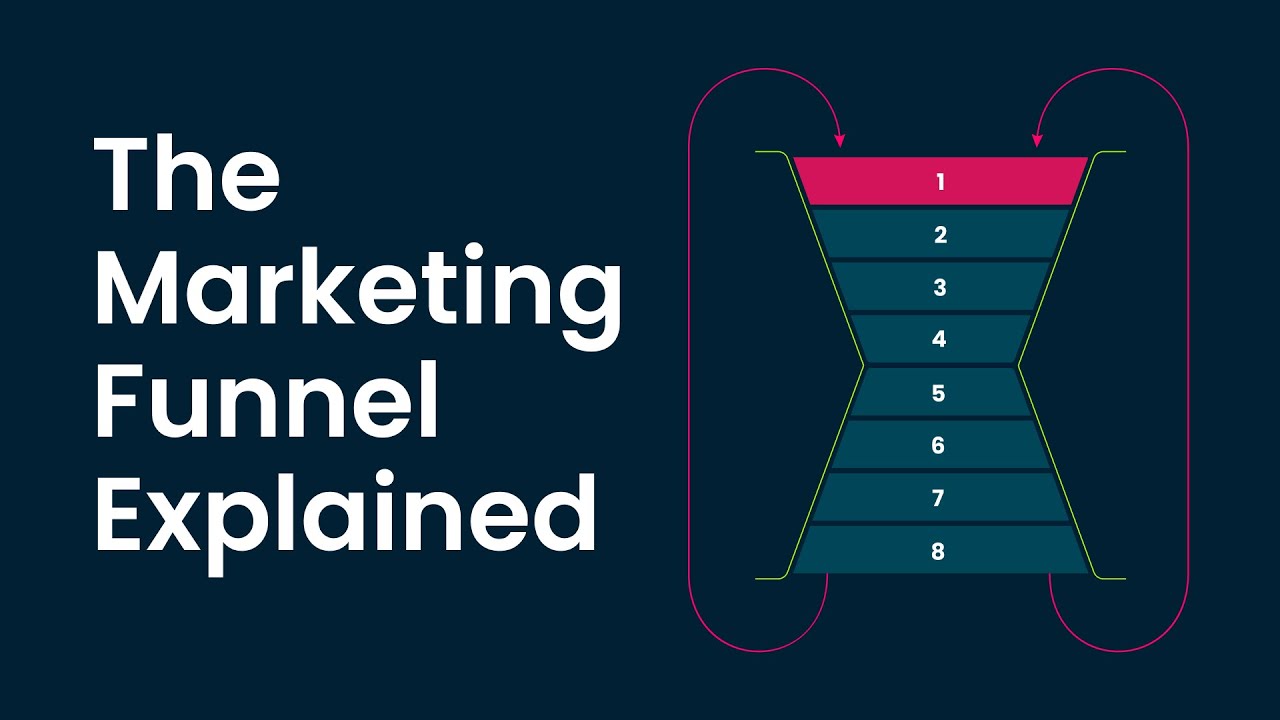
The marketing funnel is typically divided into three core stages: Top of Funnel (TOFU) for awareness, Middle of Funnel (MOFU) for consideration, and Bottom of Funnel (BOFU) for conversion.
Understanding these marketing funnel stages is critical for creating content that resonates.
- TOFU (Awareness Stage): Here, the goal is brand awareness and problem education. The user knows they have a problem but hasn’t identified a solution. Your job is to capture their attention without being salesy.
- MOFU (Consideration Stage): The user is evaluating different solutions. This is where lead generation and nurturing happen. You must demonstrate why your solution is superior.
- BOFU (Conversion Stage): The lead is ready to buy. The focus shifts to closing the deal through compelling offers and friction-free experiences.
A full-funnel marketing strategy doesn’t stop at the purchase; it extends to the loyalty stage, turning customers into advocates.
Marketing Funnel vs. Sales Funnel: A Clear Distinction for Better Strategy
While the marketing funnel focuses on generating and nurturing leads, the sales funnel focuses on closing those leads and turning them into paying customers.
Many businesses confuse the two, leading to disjointed strategies. At LIEN MMO, we emphasize aligning both teams to ensure a seamless customer journey.
| Feature | Marketing Funnel | Sales Funnel |
|---|---|---|
| Primary Goal | Generate interest and qualified leads (MQLs). | Convert leads into customers (SQLs to Deals). |
| Key Tactics | Content marketing, SEO, Social Media, Ads. | Demos, calls, negotiations, contracts. |
| Audience Mindset | “I have a problem. What are the solutions?” | “Is this specific product right for me?” |
| Ownership | Marketing Team. | Sales Team. |
Integrating these two creates a digital marketing funnel strategy where data flows freely, preventing leads from falling through the cracks.
The Undeniable Impact of a Full-Funnel Strategy on Your Bottom Line
Implementing a full-funnel strategy significantly boosts ROI by optimizing every touchpoint, reducing ad waste, and increasing the average value of each customer.
Data-driven marketing proves that a full-funnel approach is superior to disjointed campaigns.
- Higher Conversion Rates: By addressing user intent at every stage, you remove barriers to purchase.
- Cost Efficiency: You stop spending expensive ad budget targeting cold traffic with “Buy Now” messages. Instead, you use low-cost content to warm them up first.
- Better Data: A full-funnel view allows you to see exactly where users drop off, enabling precise marketing funnel optimization tactics.
The 7 Proven Funnel Marketing Tactics for Maximum Conversion

To achieve high ROI, you must deploy specific tactics tailored to each stage of the funnel, from SEO-driven content at the top to retargeting and loyalty programs at the bottom.
Tactic 1: (TOFU) Capture Attention with High-Value Content Marketing & SEO
Attract a broad audience by creating educational, SEO-optimized content that solves specific problems and addresses the search intent of your target market.
The foundation of any successful funnel marketing strategy is traffic. However, not just any traffic—you need relevant traffic.
- SEO & Search Intent: Research keywords that your audience uses when they first realize they have a problem. For example, instead of ranking for “buy AI writing tool,” rank for “how to speed up content creation.”
- Funnel Content Marketing: Create blog posts, infographics, and videos that provide immense value for free. This builds authority.
- Social Media Marketing: Distribute this content where your audience hangs out.
Expert Tip: At LIEN MMO, we focus on “Help, Don’t Sell” in the TOFU stage. If you help a user solve a small problem, they will trust you with their bigger problems (and budget).
Tactic 2: (MOFU) Build Interest and Trust with Lead Nurturing & Email Marketing
Convert anonymous visitors into leads by offering valuable lead magnets and nurturing them with automated, personalized email sequences.
Once you have traffic, you need to capture their information. Most visitors won’t buy on the first visit.
- Lead Magnets: Offer ebooks, funnel templates, checklists, or free webinars in exchange for an email address.
- Email Marketing: Set up automated drip campaigns. Send helpful resources, industry insights, and “soft sells” that position your product as the ideal solution.
- Segmentation: Group your leads based on their behavior (e.g., clicked on a link about “SEO tools” vs. “Social media tools”) to send highly relevant content.
This stage is crucial for lead nurturing, moving the prospect from “interested” to “desiring.”
Tactic 3: (MOFU) Leverage Social Proof and Case Studies to Create Desire
Overcome skepticism and build confidence by showcasing customer reviews, testimonials, and detailed case studies that prove your solution works.
In the consideration stage, your prospects are comparing you to competitors. Social proof is the tie-breaker.
- Case Studies: Publish detailed stories of how you solved a problem for a client similar to your target audience. This is vital for B2B marketing funnel strategy.
- User-Generated Content: Share photos or posts from happy customers.
- Trust Badges: Display certifications, partner logos, or “featured in” media logos on your site.
We recommend using full-funnel marketing examples in your case studies to show the complete journey of a successful client.
Tactic 4: (BOFU) Drive Action with Compelling Offers and Optimized Landing Pages
Maximize conversions by directing warm leads to high-converting landing pages featuring clear calls-to-action (CTAs), urgency, and irresistible offers.
At the Bottom of the Funnel (BOFU), the goal is the transaction.
- Landing Pages: Remove navigation links and distractions. Focus on one single goal: conversion.
- The Offer: Free trials, limited-time discounts, or bonuses work well here. For nonprofit marketing, this might be a matching donation period.
- Friction Reduction: Simplify forms. Offer multiple payment options. Ensure the page loads fast (mobile optimization).
Marketing funnel optimization tactics at this stage often yield the quickest ROI improvements.
Tactic 5: (BOFU) Implement Retargeting Campaigns to Recapture Lost Leads
Use paid ads to re-engage users who visited your site or abandoned their cart, reminding them of the value they left behind.
Statistically, 97% of first-time visitors leave without buying. PPC strategy focused on retargeting is your safety net.
- Dynamic Retargeting: Show the exact product the user viewed.
- Cross-Channel Retargeting: If they visited your website, show them an ad on Facebook or LinkedIn.
- Objection Handling: Use ad copy that addresses common reasons for not buying (e.g., “Worried about the price? Here is a 10% coupon”).
This tactic significantly lowers customer acquisition costs because you are targeting people who already know your brand.
Tactic 6: (Post-Funnel) Foster Loyalty and Advocacy with Customer Retention Programs
Turn one-time buyers into repeat customers and brand advocates through excellent support, loyalty programs, and community building.
The funnel doesn’t end at the sale. Customer retention is where profit margins truly expand.
- Onboarding: Ensure the customer knows how to use your product successfully immediately after purchase.
- Loyalty Programs: Reward repeat purchases or referrals.
- Brand Advocacy: Encourage happy customers to leave reviews or refer friends.
Increasing customer lifetime value (CLV) is the secret weapon of high-growth companies.
Tactic 7: Continuously Optimize with A/B Testing and Data Analysis
Ensure long-term success by regularly testing headlines, designs, and offers, using data to make informed decisions that improve funnel performance.
A “set it and forget it” mentality kills ROI.
- A/B Testing: Test two versions of a landing page or email subject line to see which performs better.
- Key Metrics: Monitor conversion rates, bounce rates, and time on page.
- Heatmaps: Use tools to see where users are clicking and scrolling on your site.
At LIEN MMO, we constantly analyze marketing ROI data to tweak our strategies, ensuring we stay ahead of market trends.
Building and Measuring Your High-Performance Marketing Funnel

Building a funnel requires a structured approach, while measuring its success demands tracking the right KPIs to ensure every dollar spent contributes to growth.
A Step-by-Step Guide to Building Your Marketing Funnel from Scratch
To build an effective funnel, start by mapping your customer journey, creating targeted content for each stage, and setting up the necessary technical automation.
- Define Your Audience: Create detailed buyer personas. Who are they? What are their pain points?
- Customer Journey Mapping: Sketch out the path a user takes from stranger to customer. You can use a funnel diagram or PowerPoint to visualize this.
- Content Creation: Develop the assets (blogs, ads, emails) for TOFU, MOFU, and BOFU.
- Select Channels: Decide where you will promote content (Social, Search, Email).
- Implement Automation: Use tools to link your forms, emails, and CRM.
Whether you are a full funnel marketing agency or a solo entrepreneur, these steps are universal.
Key Metrics: How to Measure Funnel Success and Calculate ROI
Track metrics like Conversion Rate, Cost Per Acquisition (CPA), and Customer Lifetime Value (CLV) to determine the health and profitability of your marketing funnel.
How to measure marketing funnel success? Focus on these KPIs:
- Traffic Volume: Are you getting enough people into the top of the funnel?
- Conversion Rate (Stage-to-Stage): What percentage moves from TOFU to MOFU, and MOFU to BOFU?
- Cost Per Lead (CPL): How much does it cost to get a signup?
- Customer Acquisition Cost (CAC): Total marketing spend / Number of new customers.
- Return on Investment (ROI): (Revenue – Cost) / Cost.
Regularly reviewing these numbers helps you identify bottlenecks. If traffic is high but leads are low, your TOFU content or offer needs work.
Real-World Inspiration: B2B and B2C Funnel Marketing Strategy Examples
Analyze successful funnels in your industry to understand how different businesses adapt these tactics for B2B long sales cycles versus B2C impulse buys.
-
B2B Marketing Funnel Strategy (SaaS Example):
- TOFU: Blog post on “How to automate accounting.”
- MOFU: Whitepaper download “The Future of Fintech” (requires email).
- BOFU: Free demo with a sales rep.
- Post-Funnel: Customer success manager assigned for onboarding.
-
B2C Marketing Funnel Strategy (E-commerce Example):
- TOFU: Instagram Reel showing a fashion trend.
- MOFU: 15% off coupon for newsletter signup.
- BOFU: Retargeting ad showing the specific item viewed with “Low Stock” warning.
- Post-Funnel: Email asking for a review with a photo for a discount on the next purchase.
Even in nonprofit marketing, the funnel applies: Awareness (Storytelling) -> Consideration (Impact Report) -> Donation (Conversion) -> Recurring Donor (Loyalty).
Conclusion
Implementing a structured funnel marketing strategy is not just a tactic; it’s a fundamental shift in how you attract, engage, and convert customers. By applying these 7 proven tactics—from SEO-driven content to data-driven optimization—you can create a powerful, high-ROI machine that not only generates leads but also builds a sustainable and loyal customer base.
At LIEN MMO, we believe that understanding the nuances of the digital marketing funnel is the difference between surviving and thriving in the online space. Start optimizing your funnel today to transform your marketing efforts and achieve significant business growth.
Ready to build a high-ROI marketing funnel that drives real results? Contact our experts at LIEN MMO for a free consultation and let us help you craft a winning strategy tailored to your business goals.