Are you struggling to convert website visitors into paying customers? A funnel marketing strategy is the ultimate roadmap for guiding potential customers from their first brand interaction to a final purchase. This guide provides a step-by-step framework to build, measure, and optimize your own high-converting funnel, helping you attract the right audience, build lasting trust, and drive sustainable growth for your business.
What is a Marketing Funnel and Why is it a Game-Changer?
A marketing funnel is a visual representation of the customer’s journey, from the initial moment they become aware of your brand to the point of purchase and beyond. It’s a strategic model that helps businesses understand and optimize the process of turning leads into customers. By mapping out this path, you can create targeted experiences that resonate with users at every step.
Demystifying the Core Concept: From Awareness to Advocacy
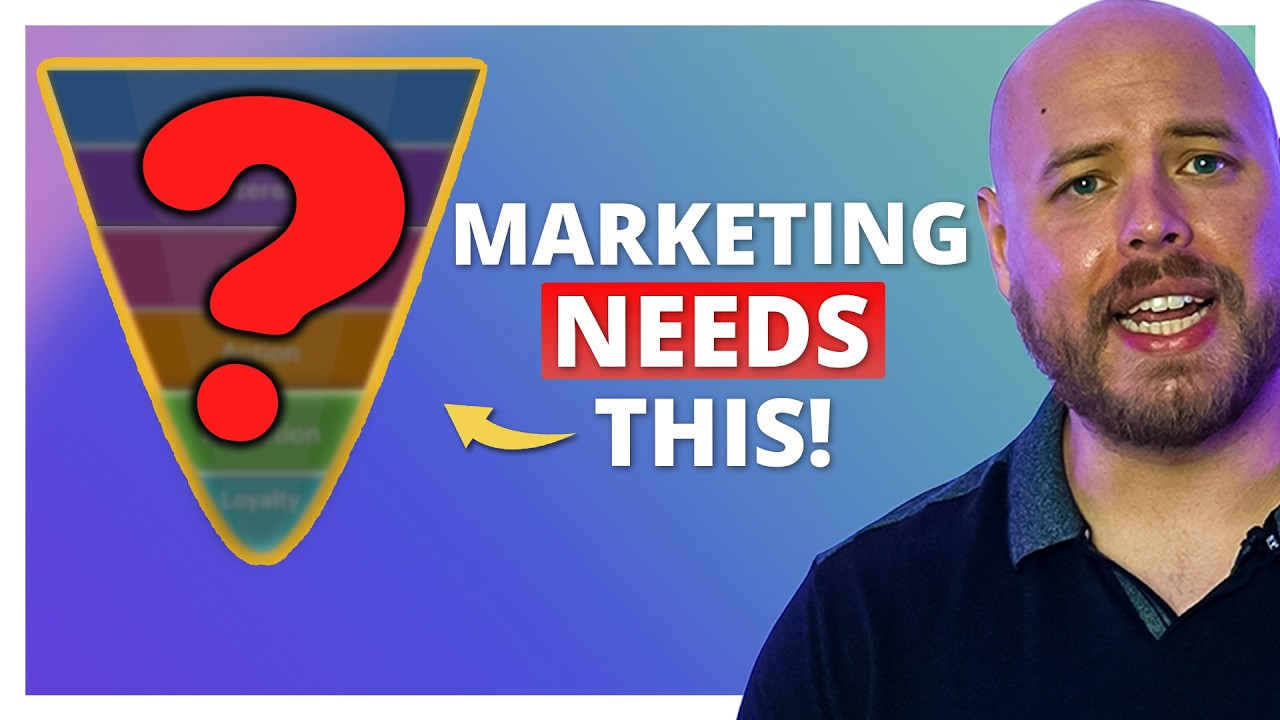
The core concept of funnel marketing is to systematically guide a large number of potential customers through a series of stages, with the group narrowing at each step. It begins with broad brand awareness, moves through consideration and conversion, and ideally culminates in loyalty and advocacy. This structured approach ensures no potential customer is left behind due to a disjointed or unclear journey.
Marketing Funnel vs. Sales Funnel: Clarifying the Key Differences
While often used interchangeably, the “sales funnel vs marketing funnel” distinction is important. The marketing funnel is broader, focusing on generating leads and creating brand awareness. Its primary goal is to capture the attention of potential customers (lead generation) and nurture them.
The sales funnel, on the other hand, is a narrower subset that deals with qualified leads passed on from the marketing team. Its focus is purely on the conversion of those leads into actual sales. In essence, marketing casts the wide net, and sales brings the fish into the boat.
The Tangible Benefits: How Funnels Drive ROI and Customer Loyalty
Implementing a clear funnel marketing strategy offers significant advantages. It provides a predictable model for lead generation and sales, allowing for more accurate forecasting. By understanding each stage, you can allocate your budget more effectively, significantly improving your marketing ROI.
Furthermore, a well-executed funnel builds trust and relationships over time. This not only increases conversion rates but also fosters customer retention and loyalty, turning one-time buyers into repeat customers and brand advocates. At LIEN MMO, we have consistently seen that businesses with a defined funnel strategy achieve more sustainable and scalable growth.
The Anatomy of a High-Converting Funnel: The Four Key Stages
Understanding the different marketing funnel stages is crucial for creating targeted content and campaigns. The most common model breaks the journey down into four key phases, often referred to by the acronyms TOFU, MOFU, and BOFU.
Top of the Funnel (TOFU): Attracting and Engaging Your Target Audience (Awareness)
This is the awareness stage, where your goal is to reach a broad but relevant audience. Potential customers at this stage are experiencing a problem and are searching for information, but they may not be aware of your specific solution yet.
Content for this stage should be educational and helpful, not salesy. Think blog posts, social media updates, infographics, and videos that address common pain points. The key is to attract visitors and make them aware that your brand exists as a helpful resource.
Middle of the Funnel (MOFU): Nurturing Interest and Building Trust (Consideration)
Once a potential customer enters the consideration stage, they are actively evaluating different solutions to their problem. They know who you are, and now you need to build trust and position your offer as the best choice. This is where you begin the lead nurturing process.
Content here should be more in-depth, such as case studies, webinars, detailed guides, and email newsletters. The goal is to provide value and demonstrate your expertise, making a compelling case for why your solution is superior to others.
Bottom of the Funnel (BOFU): Driving Purchase Decisions (Conversion)
The bottom of the funnel is where the purchase decision happens. The prospect is ready to buy, and your job is to give them the final nudge they need to convert. Your messaging should be direct, persuasive, and create a sense of urgency.
Effective BOFU content includes free trials, live demos, customer testimonials, and special offers. A clear and compelling call to action (CTA) is essential at this stage to guide them toward the final conversion.
Beyond the Sale: Creating Brand Champions (Loyalty & Advocacy)
A truly effective funnel marketing strategy doesn’t end at the sale. The post-purchase stage focuses on retention and turning customers into loyal advocates. Happy customers are more likely to make repeat purchases and refer others to your brand.
Engage them with onboarding emails, customer-exclusive content, loyalty programs, and requests for reviews. This final stage transforms the linear funnel into a flywheel, where satisfied customers help fuel the top of your funnel by bringing in new prospects.
How to Build Your Digital Marketing Funnel from Scratch: A Step-by-Step Guide
Creating a digital marketing funnel requires a strategic approach. Here’s a breakdown of how to build one from the ground up to ensure a smooth and effective customer journey.
Step 1: Define Your Buyer Personas and Map the Customer Journey
You can’t guide someone if you don’t know who they are or where they’re going. Start by creating detailed buyer personas representing your ideal customers. Understand their demographics, pain points, and motivations.
Once you have your personas, map out the typical customer journey they take from problem awareness to purchasing your solution. This map will serve as the blueprint for your funnel.
Step 2: Create a Full-Funnel Content Strategy (TOFU, MOFU, BOFU)
With your customer journey mapped, develop a content plan for each stage.
- TOFU: Create blog posts and social media content that answer broad questions.
- MOFU: Develop lead magnets like ebooks or webinars in exchange for an email address.
- BOFU: Craft compelling sales pages, testimonials, and case studies.
This full-funnel marketing strategy ensures you have the right message for the right person at the right time.
Step 3: Choose the Right Channels to Drive Traffic (SEO, Paid Ads, Social Media)
Your funnel is useless without traffic. Determine the best channels to reach your target audience at the awareness stage. A combination of organic search (SEO), paid advertising (PPC), and social media marketing is often the most effective approach for customer acquisition. Choose channels where your buyer personas are most active.
Step 4: Implement Lead Nurturing with Email Marketing and Automation
Once you capture a lead in the MOFU stage, the nurturing process begins. Use email marketing automation to send a series of targeted messages that guide prospects further down the funnel. Each email should provide value and gently push them toward the next step, building a relationship over time.
Step 5: Present a Clear Call to Action (CTA) at Every Stage
Every piece of content and every page on your website should have a clear purpose and a corresponding call to action. Whether it’s “Download our ebook,” “Sign up for our webinar,” or “Buy now,” your CTAs tell the user exactly what to do next. Make them prominent, clear, and compelling to maximize conversions at each conversion funnel stage.
Measure What Matters: How to Optimize Your Funnel for Peak Performance
Building a funnel is just the beginning. Continuous measurement and optimization are what separate a leaky funnel from a high-performance conversion machine. Focusing on the right data is key to success.
Essential Marketing Funnel Metrics to Track at Each Stage
To understand your funnel’s health, you need to track key performance indicators (KPIs) at each stage. Some of the most important marketing funnel metrics include:
- TOFU: Website Traffic, Reach, Impressions, Click-Through Rate (CTR).
- MOFU: Lead Conversion Rate, Email Open Rates, Asset Download Counts.
- BOFU: Sales Conversion Rate, Customer Acquisition Cost (CAC), Average Order Value (AOV).
- Loyalty: Customer Lifetime Value (CLV), Churn Rate, Net Promoter Score (NPS).
Introduction to Conversion Rate Optimization (CRO) for Funnels
Conversion Rate Optimization (CRO) is the systematic process of increasing the percentage of users who take a desired action. For funnels, this involves using techniques like A/B testing on your landing pages, CTAs, and email copy. By constantly testing and refining these elements, you can plug leaks in your funnel and significantly increase your overall conversion rate.
Real-World Marketing Funnel Examples for Inspiration (B2B and B2C)
Let’s look at two common examples:
- B2C Example (E-commerce): A user sees a Facebook ad for running shoes (TOFU), clicks to a blog post about “choosing the right shoe” (MOFU), signs up for a 10% discount code (MOFU), and is then retargeted with ads for the specific shoe they viewed, leading to a purchase (BOFU).
- B2B Example (SaaS): A marketing manager searches for “how to improve team productivity” and finds a helpful guide (TOFU). They download a related case study by providing their email (MOFU). They then receive an email invitation for a personalized live demo (BOFU), which leads to them signing up for a subscription.
A funnel marketing approach is more than a theoretical model; it’s a powerful, actionable strategy for understanding and guiding your customers. By meticulously building each stage, creating targeted content, and consistently measuring your results, you can transform casual interest into conversions and one-time buyers into loyal brand advocates. Start implementing these steps today to build a robust customer acquisition engine that delivers predictable, long-term success.
Ready to stop guessing and start converting? Download our free “Marketing Funnel Strategy Template” to begin building your customized, high-performance funnel today!