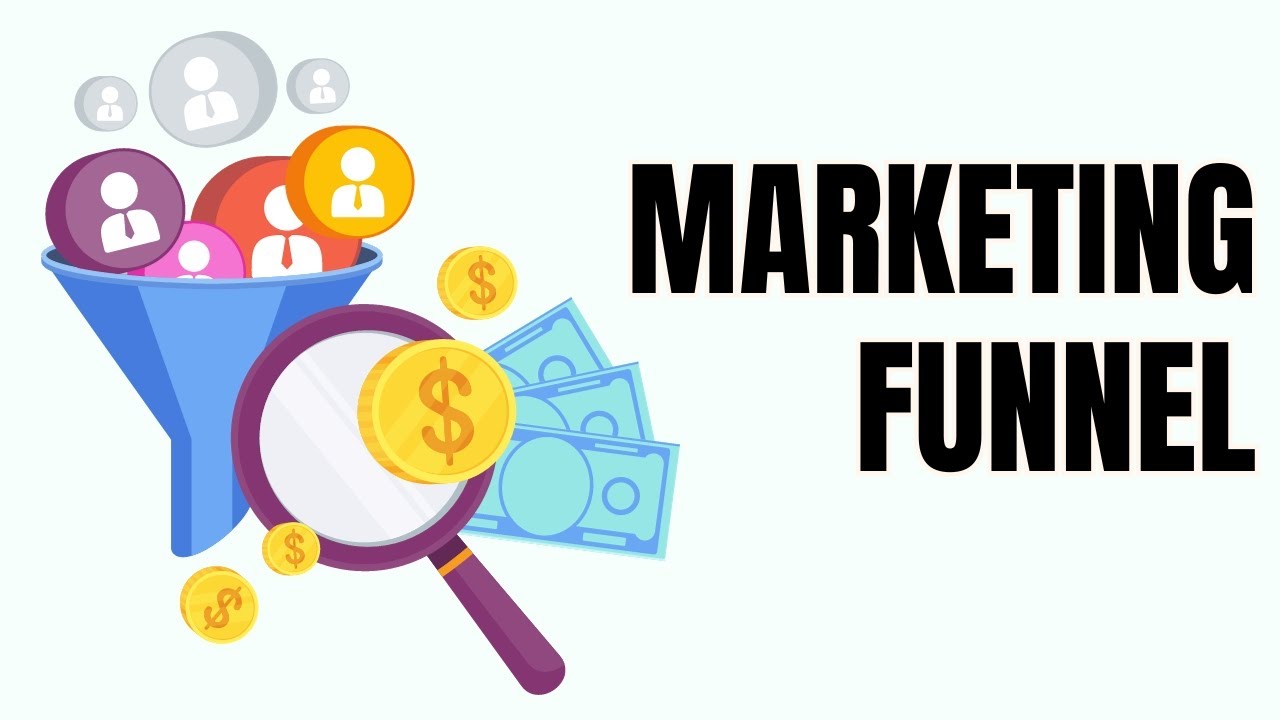

Are you struggling to convert leads into loyal customers? A full-funnel marketing strategy is your answer. This holistic, data-backed approach nurtures potential customers at every stage of their journey, from initial awareness to post-purchase advocacy. By understanding and engaging your audience across the entire customer lifecycle, you can drive sustainable growth, maximize your return on investment (ROI), and build a powerful, lasting brand that turns buyers into fans.
What is Full-Funnel Marketing and Why is it Crucial for Growth?
Many businesses focus heavily on the bottom of the funnel—the final conversion. While important, this narrow view misses massive opportunities. A full-funnel marketing strategy addresses the entire customer journey, ensuring a seamless and persuasive experience from the very first touchpoint. This approach is no longer a luxury; it’s a necessity for long-term success.
Beyond the Sales Funnel: A Holistic Definition of Full-Funnel Marketing
So, what is full-funnel marketing? It’s an integrated and holistic marketing approach that considers every stage a customer goes through, from not knowing your brand exists to becoming a loyal advocate. Unlike a traditional sales funnel that often ends at the purchase, full-funnel marketing extends into post-purchase retention and loyalty. It’s about building relationships, not just processing transactions.
This strategy requires a deep understanding of the buyer’s journey mapping, aligning marketing channels and messaging to the user’s specific needs at each phase. It combines elements of brand marketing (upper funnel) with performance marketing funnels (lower funnel) to create a single, cohesive engine for growth.
The Undeniable Benefits of a Full-Funnel Approach: From Higher ROI to Customer Loyalty
Adopting a full-funnel marketing strategy offers significant advantages that impact both your top line and bottom line. By engaging customers effectively at every stage, you create a more efficient and predictable growth model.
One of the most significant benefits is a more accurate and insightful view of your marketing performance. Instead of attributing a sale to a single ad, you understand how different channels contribute across the funnel stages. This data-backed strategy allows for smarter budget allocation, leading to a lower Customer Acquisition Cost (CAC) and a higher overall Return on Investment (ROI).
Furthermore, a full-funnel approach excels at building lasting customer relationships. By providing value before asking for a sale and continuing the conversation after the purchase, you foster loyalty and advocacy. This dramatically increases Customer Lifetime Value (CLV), turning one-time buyers into repeat customers who champion your brand.
The Blueprint for Success: How to Build a Data-Backed Full-Funnel Marketing Strategy

Building an effective full-funnel marketing plan requires a structured approach. It involves defining objectives, tactics, and metrics for each of the core marketing funnel stages. At LIEN MMO, we guide our partners through this process to create a robust framework for sustainable growth.
Stage 1 (Awareness): Capturing Attention and Building Brand Awareness
The first step is making your target audience aware that you exist. The goal here is not to sell but to educate, entertain, and connect. During this awareness stage, you introduce your brand and the problems you solve. This is the top of the funnel (ToFu), where you cast a wide net to attract potential customers. Strong brand awareness is the foundation of any successful campaign.
Stage 2 (Consideration): Nurturing Interest with High-Value Content
Once a potential customer is aware of your brand, they enter the consideration stage. Here, they are actively researching solutions to their problem. Your goal is to position your brand as the best possible choice. This middle-of-the-funnel (MoFu) phase is all about lead nurturing. You can achieve this by providing high-value content like detailed guides, webinars, case studies, and comparison reviews that help them make an informed decision.
Stage 3 (Conversion): Driving Desire and Encouraging Action
The conversion stage is where your efforts culminate in a specific action, typically a purchase. At this bottom-of-the-funnel (BoFu) stage, your audience is ready to buy, but they may need a final nudge. Tactics here are more direct and persuasive. Your focus should be on making the purchasing process as seamless as possible and reinforcing the value of your offer.
Stage 4 (Retention & Advocacy): Fostering Loyalty Beyond the Purchase
A true full-funnel marketing strategy doesn’t end at the sale. The post-purchase stage is critical for building long-term value. The goals are retention and advocacy: turning customers into repeat buyers and enthusiastic fans. Excellent customer service, loyalty programs, and community engagement are key. A loyal customer base provides stable revenue and powerful social proof that attracts new leads, creating a self-sustaining growth loop.
Activating Your Strategy: Key Channels and Tactics for Each Funnel Stage

To bring your full-funnel approach to life, you need to deploy the right channels and tactics at each stage. This multi-channel marketing effort ensures you meet your audience where they are with a message that resonates.
Top-of-Funnel Channels: SEO, Content Marketing, and Social Media
To build awareness, you need to be visible where your audience is searching for information and spending their time. An effective SEO strategy ensures you appear in search results for relevant queries. Content marketing, through blog posts and videos, answers their initial questions. Social media marketing helps you reach new audiences and build a community around your brand.
Middle-of-Funnel Channels: Email Marketing, Lead Nurturing, and Retargeting
For the consideration stage, you need channels that allow for deeper engagement. Email marketing is perfect for delivering targeted content sequences through marketing automation. This lead nurturing process builds trust over time. Retargeting campaigns on social media and display networks can also re-engage users who have visited your site but haven’t converted yet, keeping your brand top-of-mind.
Bottom-of-Funnel Channels: Paid Advertising (PPC), CRO, and Personalized Offers
When it’s time to drive conversions, your channels must be direct and action-oriented. Paid advertising (PPC) campaigns targeting high-intent keywords can capture users ready to buy. Conversion Rate Optimization (CRO) on your landing pages and checkout process removes friction. Personalized offers and promotions delivered via email or ads can provide the final incentive needed to close the deal.
Measuring What Matters: Essential KPIs for Full-Funnel Success
A data-backed strategy is only as good as the data you track. To optimize your full-funnel marketing efforts, you must monitor the right Key Performance Indicators (KPIs) at each stage. This marketing analytics practice provides the insights needed to refine your approach.
Key Performance Indicators (KPIs) for the Awareness Stage
At the top of the funnel, success is measured by reach and attention. Key metrics include:
- Website Traffic & Unique Visitors
- Impressions & Reach on social media
- Keyword Rankings (from your SEO strategy)
- Brand Search Volume
Tracking Engagement in the Consideration Stage
In the middle of the funnel, you want to see if your audience is engaging with your content and moving closer to a decision. Track these KPIs:
- Email Open Rates & Click-Through Rates (CTR)
- Content Downloads (e.g., ebooks, whitepapers)
- Time on Page & Bounce Rate
- Lead Generation & Cost Per Lead (CPL)
Analyzing Conversion and ROI at the Bottom of the Funnel
At the bottom of the funnel, the focus shifts to sales and profitability. The most important metrics are:
- Conversion Rate
- Customer Acquisition Cost (CAC)
- Return on Investment (ROI)
- Average Order Value (AOV)
Measuring Customer Lifetime Value (CLV) and Retention
For the post-purchase stage, you need to measure customer loyalty and long-term value. Key metrics include:
- Customer Retention Rate & Churn Rate
- Repeat Purchase Rate
- Customer Lifetime Value (CLV)
- Net Promoter Score (NPS)
Embracing a full-funnel marketing strategy is no longer optional—it’s essential for sustainable business growth. By moving beyond siloed tactics and adopting a holistic, data-driven view of the entire customer journey, you create a powerful engine for attracting, converting, and delighting customers. This approach not only boosts key metrics like ROI and CLV but also builds a resilient brand with a loyal community of advocates, ensuring long-term success in a competitive landscape.
Ready to build a full-funnel marketing strategy that drives real results? Contact our experts at LIEN MMO today for a free consultation and let’s start growing your business together!