This guide on B2B marketing funnels explained provides a critical framework for converting prospects into loyal customers. You will learn the essential stages from awareness to decision, how to build a powerful funnel from scratch, and the key metrics to measure success. Master these strategies to optimize your lead generation, align your sales and marketing efforts, and drive sustainable business growth in the competitive B2B landscape.
What is a B2B Marketing Funnel and Why is it Crucial for Your Business?
Navigating the complex world of business-to-business sales requires a strategic map. A B2B marketing funnel provides just that—a structured approach to guide potential customers from their first interaction with your brand to a final purchase decision. Unlike B2C, the B2B customer journey is often longer, involves more stakeholders, and is driven by logic and value rather than emotion.
Demystifying the B2B Marketing Funnel: A Simple Definition
A B2B marketing funnel is a visual representation of the customer journey, detailing the process a business prospect goes through before becoming a paying customer. It’s called a “funnel” because it starts wide at the top with a large number of potential leads and narrows as they move through various stages, with only the most qualified prospects making it to the bottom to become a customer.
The core purpose of this framework is twofold: to generate qualified leads and to nurture them effectively until they are ready for a sales conversation. This systematic approach ensures that marketing efforts are targeted, efficient, and aligned with revenue goals.
B2B Sales Funnel vs. Marketing Funnel: Understanding the Key Differences
While often used interchangeably, the terms “marketing funnel” and “sales funnel” represent distinct, though connected, processes. The primary difference lies in their focus. A marketing funnel is designed to generate leads and create brand awareness. Its goal is to attract a broad audience and then filter and educate them, identifying those who are genuinely interested in a solution.
A sales funnel, on the other hand, begins where the marketing funnel leaves off. It takes the qualified leads—often called Marketing Qualified Leads (MQLs)—and focuses on converting them into customers. This process is more hands-on, involving direct engagement from the sales team through demos, negotiations, and closing deals. In essence, marketing casts the net, and sales reels in the fish.
The Undeniable Benefits of a Well-Structured B2B Funnel
Implementing a well-defined B2B marketing funnel is not just a theoretical exercise; it delivers tangible business results. By mapping out the customer journey, you can create a more predictable and scalable process for growth.
Key benefits include:
- Improved Lead Quality: By nurturing prospects through targeted content, you ensure that only well-informed and genuinely interested leads reach the sales team.
- Enhanced Conversion Rates: A structured funnel provides the right information at the right time, building trust and guiding prospects toward a purchase decision.
- Better Sales and Marketing Alignment: A shared understanding of the funnel creates a seamless handover from marketing to sales, reducing friction and improving efficiency.
- Measurable ROI: The funnel provides clear stages and metrics, making it easier to track performance, calculate marketing ROI, and optimize your strategy for better results.
The Core Stages of the B2B Marketing Funnel
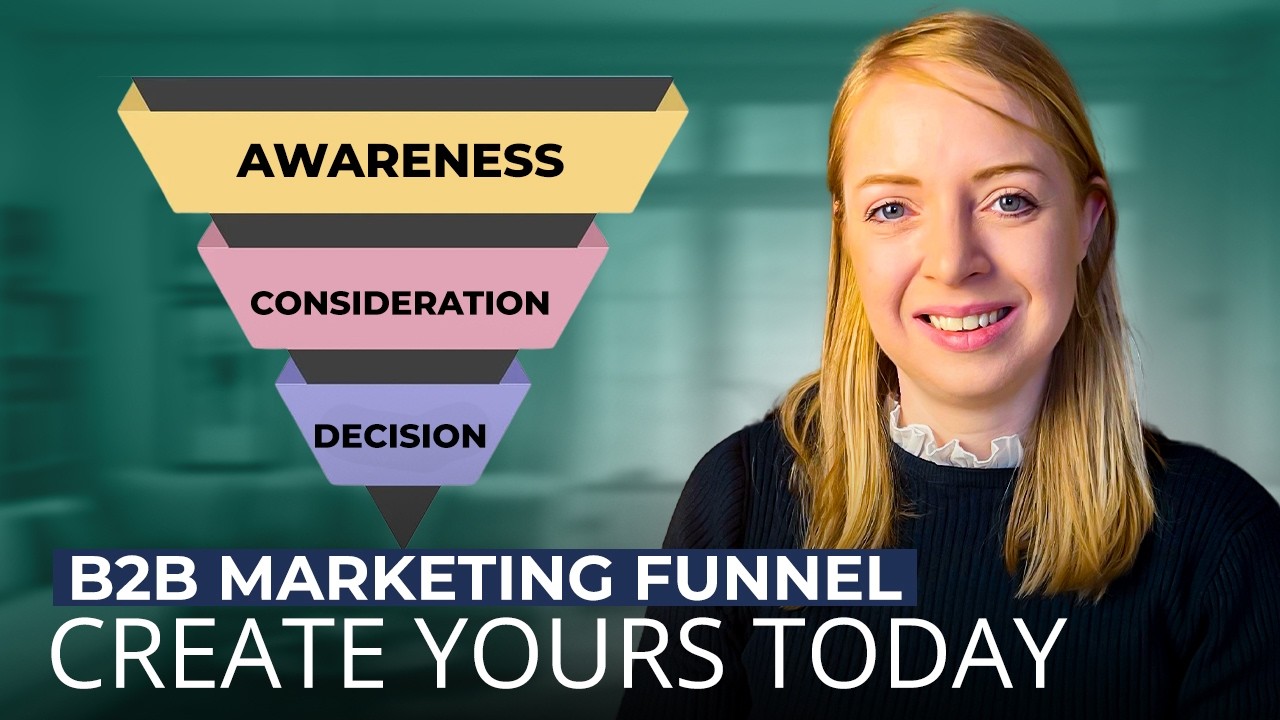
The B2B marketing funnel is typically divided into three main stages, each with a distinct goal and set of strategies. Understanding these stages is fundamental to building an effective customer acquisition engine.
Top of the Funnel (TOFU): Building Awareness and Generating Traffic
At the Top of the Funnel (TOFU), your primary goal is to attract a wide audience and make them aware of a problem they have and that your company can help solve it. Prospects at this stage are not ready to buy; they are simply gathering information.
Your focus here is on educational, non-promotional content that addresses their pain points. Effective TOFU strategies include search engine optimization (SEO) to increase website traffic, blog posts, ebooks, infographics, and social media engagement. The key is to provide value and establish your brand as a credible authority.
Middle of the Funnel (MOFU): Nurturing Leads and Building Trust
Once a prospect has engaged with your TOFU content—perhaps by downloading an ebook or subscribing to a newsletter—they move into the Middle of the Funnel (MOFU). Here, the goal shifts from awareness to consideration. You need to nurture these leads, build trust, and position your solution as the best choice.
Content at this stage should be more in-depth and solution-oriented. Case studies, white papers, webinars, and email marketing campaigns are powerful MOFU tools. This is where you demonstrate your expertise and show prospects how you can specifically solve their problems, turning a passive browser into a qualified lead.
Bottom of the Funnel (BOFU): Driving Conversions and Closing Deals
The Bottom of the Funnel (BOFU) is the final stage where leads are on the cusp of making a decision. They are highly qualified and are actively comparing vendors. Your objective is to convert these leads into customers.
Interaction at the BOFU stage is typically more direct and personalized. This includes free trials, live demos, consultations, and detailed pricing pages. The content and communication should instill confidence and make a compelling case for why your product or service is the superior choice, ultimately leading to a successful conversion.
How to Build a High-Converting B2B Marketing Funnel: A Step-by-Step Guide
Creating an effective B2B marketing funnel requires a strategic and methodical approach. It’s about understanding your audience deeply and crafting a journey that meets their needs at every turn.
Step 1: Define Your Buyer Persona and Map the Customer Journey
The foundation of any successful funnel is a deep understanding of your ideal customer. Develop detailed buyer personas that outline their roles, responsibilities, goals, and, most importantly, their pain points. What challenges are they trying to overcome? What questions are they asking?
Once you have your persona, map out their typical customer journey. Identify the touchpoints they have with your brand at the awareness, consideration, and decision stages. This map will serve as the blueprint for your entire funnel strategy.
Step 2: Choose Your B2B Marketing Funnel Strategies for Each Stage
With a clear understanding of your customer’s journey, you can select the most effective marketing strategies for each stage of the funnel.
- TOFU: Focus on attracting visitors through SEO, content marketing (blogging), and social media. The goal is to maximize reach and generate initial interest.
- MOFU: Engage prospects with targeted email marketing campaigns, in-depth webinars, and compelling case studies. Marketing automation can be used here to deliver personalized content at scale.
- BOFU: Drive action with clear calls-to-action (CTAs) for product demos, free trials, or consultations. Retargeting ads can also be effective in reminding prospects of your solution.
Step 3: Create a B2B Content Marketing Funnel that Resonates
Content is the fuel for your B2B marketing funnel. You need to create valuable assets tailored to the needs of your buyer persona at each stage.
- Awareness Stage (TOFU): Create blog posts, articles, and infographics that address high-level problems and questions.
- Consideration Stage (MOFU): Develop white papers, case studies, and comparison guides that showcase your expertise and help prospects evaluate their options.
- Decision Stage (BOFU): Provide product demos, customer testimonials, and detailed specification sheets that make the final decision easier.
Step 4: Implement Lead Nurturing and Marketing Automation
Manually guiding every lead through the funnel is impossible at scale. This is where lead nurturing and marketing automation become critical. Use a CRM and marketing automation platform to track lead behavior and deliver the right message at the right time.
Set up automated email workflows to nurture leads who download TOFU content, inviting them to webinars (MOFU) and eventually offering a demo (BOFU). This ensures no lead falls through the cracks and that each one receives a personalized experience.
How to Optimize Your B2B Marketing Funnel for Maximum Impact
Building a funnel is just the beginning. The most successful businesses continuously analyze and optimize their funnels to improve performance and maximize return on investment.
The Importance of Sales and Marketing Alignment
One of the biggest leaks in any B2B funnel is the gap between sales and marketing. When these two teams operate in silos, leads get lost, messaging becomes inconsistent, and conversions suffer. Achieving true sales and marketing alignment is crucial for optimization.
At LIEN MMO, we recommend regular meetings, shared goals (KPIs), and a clear Service Level Agreement (SLA) that defines what constitutes a qualified lead and the protocol for handoff. This collaboration ensures a smooth transition for the customer and maximizes revenue opportunities.
Advanced B2B Marketing Funnel Strategies: From ABM to Retargeting
Once your foundational funnel is in place, you can explore more advanced strategies. Account-Based Marketing (ABM) flips the traditional funnel by focusing marketing and sales resources on a select set of high-value target accounts. This highly personalized approach is particularly effective for B2B SaaS and enterprise sales.
Retargeting is another powerful technique. It allows you to display targeted ads to users who have previously visited your website, keeping your brand top-of-mind as they move through their decision-making process.
A/B Testing and Conversion Rate Optimization (CRO) Techniques
Data-driven optimization is key to improving funnel performance. Continuously use A/B testing on elements like landing page headlines, email subject lines, and calls-to-action to see what resonates best with your audience.
Conversion Rate Optimization (CRO) is the systematic process of increasing the percentage of users who take a desired action. Analyze user behavior on your website, identify points of friction, and make iterative improvements to streamline the customer journey and boost your conversion rate.
How to Measure B2B Marketing Funnel Success: Key Metrics (KPIs)
You can’t optimize what you don’t measure. Tracking the right Key Performance Indicators (KPIs) is essential to understanding the health of your B2B marketing funnel and demonstrating its value.
Essential B2B Marketing Funnel Metrics to Track
While there are countless metrics you could track, focus on those that provide the most insight into your funnel’s efficiency and impact on revenue.
- Website Traffic: The total number of visitors entering the top of your funnel.
- Lead Generation: The number of new contacts acquired through forms and content downloads.
- Conversion Rate: The percentage of users who complete a desired action at each stage (e.g., visitor-to-lead, lead-to-MQL, MQL-to-customer).
- Lead-to-Customer Rate: The overall percentage of leads that become paying customers.
Calculating Marketing ROI, Customer Acquisition Cost (CAC), and Customer Lifetime Value (CLV)
To truly measure success, you need to connect marketing efforts to financial outcomes.
- Marketing ROI: This measures the revenue generated from marketing activities against the cost of those activities.
- Customer Acquisition Cost (CAC): This is the total cost of sales and marketing efforts required to acquire a new customer. A successful strategy will have a low CAC relative to the customer’s value.
- Customer Lifetime Value (CLV): This metric predicts the total revenue your business can expect from a single customer account. A healthy business model requires a CLV that is significantly higher than the CAC.
Beyond the Funnel: Focusing on Retention and Advocacy
The journey doesn’t end once a deal is closed. The most sustainable businesses focus on turning customers into loyal advocates. Post-purchase, your focus should shift to retention and advocacy.
Happy customers are more likely to purchase again and refer new business, creating a powerful growth loop. Implement customer success programs, solicit feedback, and create loyalty initiatives to maximize customer lifetime value and build a strong brand reputation.
Building and optimizing a B2B marketing funnel is not a one-time task but an ongoing process of understanding your customer, refining your strategy, and measuring results. By focusing on the distinct stages, aligning sales and marketing, and tracking the right KPIs, you can create a powerful engine for lead generation. This strategic approach will not only drive conversions but also build a sustainable foundation for long-term customer relationships and business growth.
Ready to build a B2B marketing funnel that drives results? At LIEN MMO, we specialize in helping businesses leverage AI tools and SaaS solutions to enhance their marketing efforts. Contact our experts for a free consultation and start converting more leads today!