
Mastering the executive summary is the key to unlocking funding, gaining project approval, and driving business success. A compelling summary captures the attention of busy stakeholders, persuasively presenting your most critical information upfront. This guide provides actionable templates and real-world examples of an executive summary to help you craft a powerful narrative that distills your entire business plan, project proposal, or report into a single, impactful page that demands action and gets results.

What is an Executive Summary and Why is it Your Most Powerful Tool?
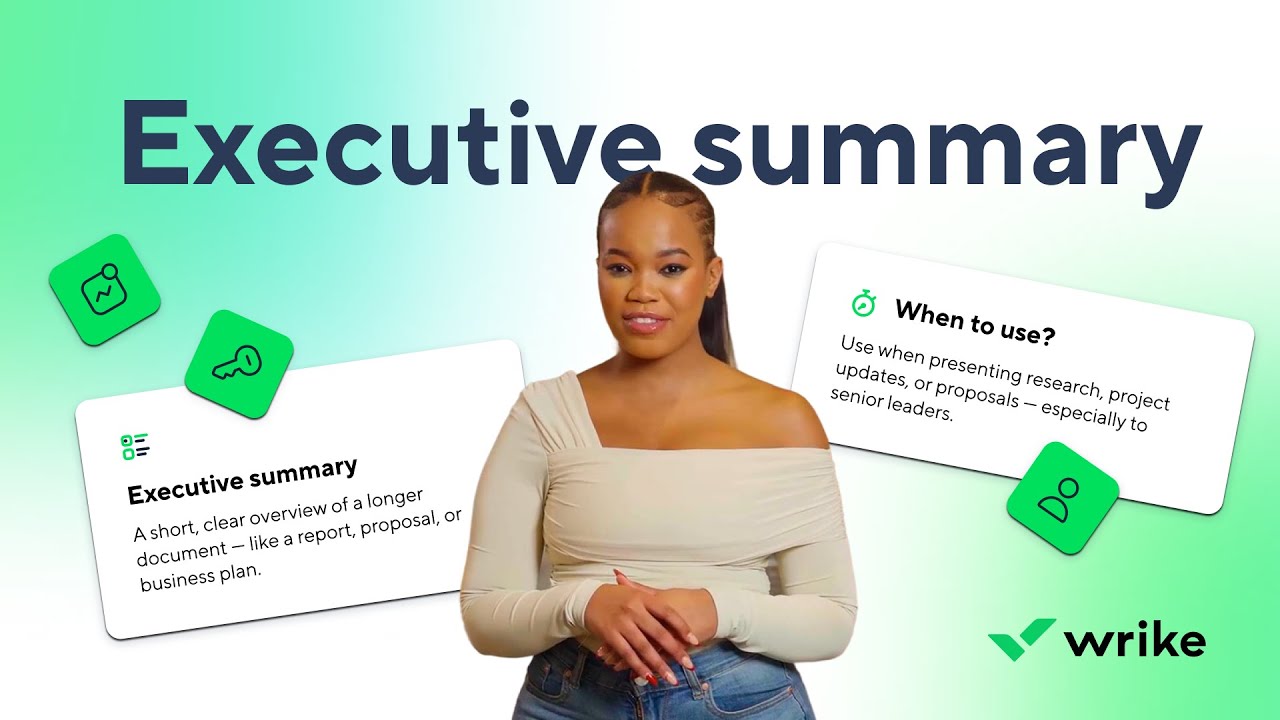
An executive summary is a condensed version of a longer document, such as a business plan, project proposal, or in-depth report. It is designed to give time-constrained readers, like investors or C-level executives, a high-level overview of the document’s most critical points. It isn’t just a summary; it’s a strategic tool designed to persuade and facilitate quick, informed decisions.
The Core Purpose: To Persuade, Inform, and Drive Decisions
The primary purpose of an executive summary is to convince the reader to take a specific action—approve a project, fund a business, or adopt a new strategy. It achieves this by presenting the most crucial information in a concise and easily digestible format. It respects the reader’s time while highlighting the value proposition and potential impact of the full document.
Key Differences: Executive Summary vs. Project Plan vs. Overview
While these terms are sometimes used interchangeably, they serve distinct functions. An overview is a brief introduction. A project plan is a detailed document outlining tasks, timelines, and resources. An executive summary, however, is a standalone document that encapsulates the entire plan’s essence, from the problem to the solution and expected outcomes. It’s the sales pitch for the entire document.
The 5 Essential Components Every Winning Summary Must Include
A winning executive summary structure and format should always contain these core components to be effective:
- The Problem Statement: Clearly articulate the problem, need, or opportunity you are addressing. Why does this matter to the target audience?
- The Proposed Solution: Describe your unique solution or proposal. What is your value proposition, and what makes it a competitive advantage?
- Market Analysis & Key Findings: Briefly summarize the market opportunity and your most critical data. Who is your target audience? What do the key findings from your research document show?
- Financial Projections: Provide a high-level look at the financial implications. This includes key metrics like costs, revenue projections, and potential Return on Investment (ROI).
- Recommendations & Call to Action: Conclude with specific, actionable recommendations. What do you want the reader to do next? This could be to approve funding, greenlight a project, or proceed to the next stage.
How to Write a Compelling Executive Summary: A Step-by-Step Guide
Knowing the components is one thing; weaving them into a persuasive narrative is another. Here’s how to write an executive summary that commands attention.
Step 1: Start with the Problem and Your Unique Solution
Begin by grabbing the reader’s attention with a concise description of the problem. Frame it in a way that resonates with their goals or pain points. Immediately follow up with your unique solution, clearly stating the benefits and impact. This sets the stage and makes it clear why your proposal is relevant.
Step 2: Outline Key Findings, Objectives, and Financial Projections
Next, support your solution with the most compelling data. This is where you introduce key findings from your market analysis, state your clear objectives, and present top-line financial projections. Use specific numbers and data points to build credibility and demonstrate the viability of your plan. This section provides the logical backbone for your recommendations.
Step 3: Conclude with Clear Recommendations and a Call to Action
End with a strong, confident conclusion. Reiterate your key recommendations and explicitly state what you need from the reader. Whether it’s funding, approvals, or strategic alignment, your call to action should be unambiguous. Make it easy for decision-makers to say “yes.”
Pro Tips: Writing with Clarity, Brevity, and Impact
- Keep it Concise: The ideal executive summary length is one to two pages. Every word should earn its place.
- Know Your Audience: Tailor the language and focus to your stakeholders. Investors care about ROI, while internal managers may focus on operational impact.
- Write it Last: Although it comes first in the document, write the executive summary after the full report is complete. This ensures you accurately summarize the final content.
- Stay Professional: Maintain a professional and confident tone. Avoid jargon and use clear, persuasive language. At LIEN MMO, we advise clients to focus on benefits over features to make the content more compelling.
Real-World Executive Summary Examples for Every Business Need

Theory is helpful, but seeing practical examples of a executive summary is often the best way to learn. Below are summary templates for various business scenarios.
Example 1: The Startup Business Plan for Securing Investment
- Business: “EcoFresh,” a subscription service for zero-waste grocery delivery.
- Problem: Environmentally conscious consumers struggle to find convenient, plastic-free grocery options.
- Solution: EcoFresh offers a curated weekly delivery service using reusable containers and electric vehicles, reducing household waste by up to 80%.
- Market: The sustainable goods market is valued at $150 billion and growing 20% annually. Our target is eco-conscious urban millennials.
- Financials: We project $1.2M in revenue in Year 1 with a 25% net margin.
- Ask: We are seeking $500,000 in seed funding for a 15% equity stake to expand our delivery fleet and marketing efforts.
Example 2: The Project Proposal for Gaining Internal Approval
- Project: “Project Fusion,” an initiative to implement a new company-wide CRM system.
- Problem: Our current sales and support data is siloed across three different platforms, leading to inefficiencies and a 15% higher customer churn rate. Effective project management is impossible with the current tools.
- Solution: Project Fusion will migrate all teams to a single, unified CRM platform, providing a 360-degree customer view.
- Objectives: Reduce customer churn by 10%, increase sales team productivity by 25%, and improve data accuracy for strategic decisions.
- Impact: The project is projected to deliver an ROI of 200% within 24 months through increased efficiency and customer retention.
- Request: We request approval for the project and a budget of $150,000 to cover software licensing and implementation.
Example 3: The Marketing Plan for Budget Justification
- Campaign: “Connect & Grow” Q1 Digital Marketing Campaign.
- Problem: Our brand has low visibility among the 18-25 demographic, a key growth segment.
- Solution: This marketing plan outlines a multi-channel digital campaign focused on TikTok and Instagram to build brand awareness and drive Q1 sales.
- Goals: Increase brand engagement in the target demographic by 40%, generate 5,000 new leads, and achieve a 3:1 return on ad spend.
- Methodology: The campaign will leverage influencer partnerships, short-form video content, and targeted social media advertising.
- Budget: We request a budget of $75,000 to execute this strategic plan and achieve the stated objectives.
Example 4: The In-Depth Research Report for Strategic Insights
- Report: “The Future of Remote Work: Post-2025 Trends.”
- Introduction: This report analyzes the long-term impact of hybrid work models on employee productivity and corporate culture.
- Key Findings: Our research shows that companies with flexible remote work policies report 22% higher employee retention. Furthermore, 65% of employees state that the availability of remote work is a key factor in job selection.
- Conclusion: A mandatory full-time return to the office poses a significant risk to talent retention and competitive advantage.
- Recommendations: We recommend that leadership develops a permanent, structured hybrid work policy to attract and retain top talent and maintain a competitive edge.
Download Your Free Executive Summary Templates to Get Started
To help you apply these concepts, we have created a free executive summary template free to download. Having a solid business plan template is crucial, and the executive summary is its most important page. These templates provide a clear structure and format, allowing you to focus on crafting a persuasive message.
An executive summary is more than a brief overview; it’s your strategic advantage. By structuring it to highlight the problem, your solution, and the expected impact, you create a persuasive tool that respects the reader’s time and drives them toward the desired outcome. Use the provided examples of a executive summary and templates as a blueprint to transform your detailed plans into concise, powerful documents that open doors and secure success for your business ventures.
Ready to create an executive summary that gets results? Download our free, easy-to-use Word templates now and start building a compelling case for your next big idea.