In today’s fast-paced business world, decisions are made in minutes. A compelling sample executive summary report is your most critical tool, distilling complex reports into a powerful, concise overview. Mastering this document is not just about summarizing; it’s about influencing key stakeholders and driving decisive action. This guide will provide you with the framework, examples, and templates to transform your reports into catalysts for strategic growth and impactful decision-making, ensuring your key messages are heard and acted upon.

Why a Powerful Executive Summary is Your Secret Weapon for Influence
An executive summary is often the only part of a report a busy C-suite executive will read. It’s your single best opportunity to make an impression and persuade leadership. A well-crafted summary frames the entire document, guiding the reader’s perspective and highlighting the most critical information needed for strategic planning and immediate decision-making.
The Core Purpose: More Than Just a Summary
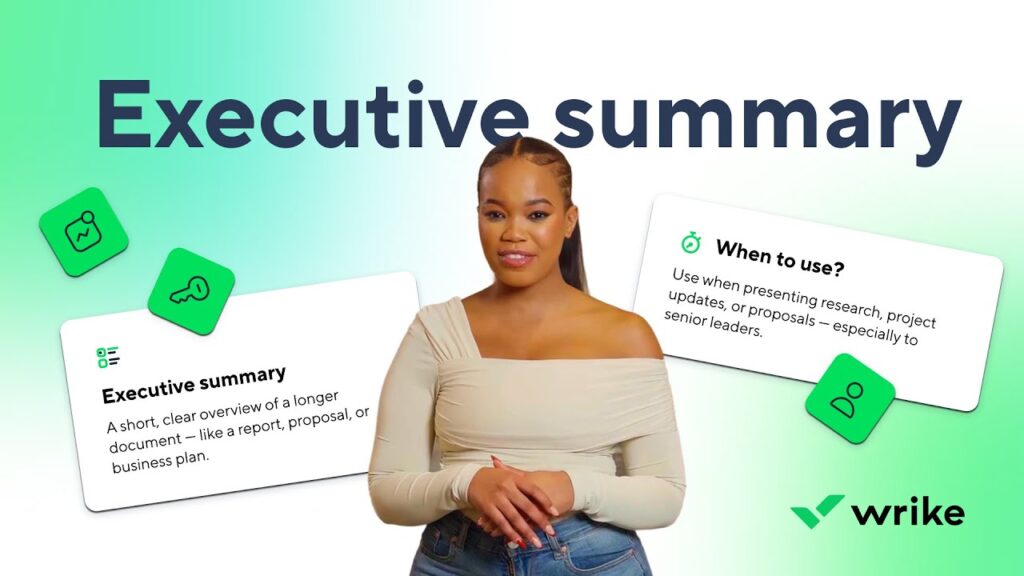
The primary purpose of an executive summary is to provide a high-level overview of a lengthy document, enabling time-constrained readers to grasp its essential content quickly. Unlike a simple introduction, it functions as a standalone document. It presents the core problem, analyzes key findings, and proposes data-driven solutions and recommendations. Its ultimate goal is to equip decision-makers with the actionable insights they need to act confidently.
Key Benefits for C-Suite Executives and Stakeholders
For board members and senior leadership, time is the most valuable asset. A clear and concise executive summary delivers immense value by:
- Saving Valuable Time: It distills pages of data into the most crucial points, allowing executives to understand the situation without reading the entire report.
- Improving Decision-Making: By presenting a clear problem statement, proposed solutions, and potential outcomes, it facilitates faster and more informed strategic decisions.
- Enhancing Clarity: It cuts through the noise and technical jargon, ensuring the main message is understood by all stakeholders, regardless of their background.
- Driving Alignment: It ensures everyone on the leadership team is working from the same high-level understanding of a project or business proposal.
Executive Summary vs. Abstract: Understanding the Key Differences
Though often confused, an executive summary and an abstract serve different purposes. An abstract is a short, neutral overview of a research report or academic paper. Its main goal is to describe the document’s content, including its methodology and findings, without making recommendations.
Conversely, an executive summary is persuasive. It is written for a business audience and is designed to lead to a decision. It summarizes the key points of a business plan or project proposal with the explicit goal of convincing the reader to take a specific course of action. The focus is on recommendations and business impact, making it a tool for persuasion, not just description.
The Anatomy of a Flawless Executive Summary Report

Creating a flawless sample executive summary report requires a clear structure and the inclusion of specific, high-impact components. This framework ensures your message is delivered with clarity and purpose, capturing the attention of any business executive.
Essential Components to Include for Maximum Impact
To ensure your executive summary is comprehensive and persuasive, it must contain several key elements. Each component builds upon the last to create a compelling narrative for decision-makers. At LIEN MMO, we recommend including:
- The Hook/Problem Statement: Start by grabbing the reader’s attention with a clear statement of the problem, opportunity, or issue the main report addresses.
- The Proposed Solution: Briefly describe the recommended solution or course of action. This is the core of your proposal.
- Key Findings & Analysis: Summarize the most critical data and insights that support your proposed solution. This section provides the “why” behind your recommendation.
- Recommendations & Actionable Insights: Clearly and concisely list the specific actions you want the reader to take. This could be approving a budget, signing off on a project, or adopting a new strategy.
- Financial Overview: If relevant, include a brief summary of the costs, potential return on investment, and overall financial impact.
Perfecting the Format: How Long Should an Executive Summary Be?
One of the most common questions is, “how long should an executive summary be?” The answer depends on the length of the main document, but the golden rule is brevity. Ideally, an executive summary should be between 5-10% of the total length of the report. For most business plans and project proposals, this translates to one to two pages. The goal is to provide a high-level overview that respects the reader’s limited time.
Best Practices for a Persuasive and Professional Tone
The tone of your executive summary should be confident, professional, and persuasive. Use strong, active verbs and avoid passive language. The writing should be clear, direct, and free of jargon. Remember, you are communicating with C-suite executives; the language must be respectful of their position and focused on strategic implications. Back up your claims with data to build credibility and trust.
A Step-by-Step Guide to Writing an Executive Summary That Gets Results

Writing an effective executive summary is a structured process. By following a clear set of steps, you can distill complex information into a powerful document that drives action. This executive summary writing guide breaks the process down into four manageable stages.
Step 1: Begin with the End in Mind – Define Your Audience and Objective
Before you write a single word, identify your primary audience. Are you writing for board members, investors, or internal project managers? Understanding their priorities and pain points will help you tailor the message. Next, define your main objective. Do you need funding approval, project authorization, or strategic buy-in? Your objective will shape the entire narrative.
Step 2: Synthesize Key Findings, Data, and Actionable Insights
With your audience and objective defined, review the main report and extract the most critical information. Focus on the key findings from your data analysis that directly support your final recommendations. Do not try to summarize everything. Instead, be selective and highlight only the data points that are essential for decision-making.
Step 3: Draft the Narrative – Problem, Solution, and Recommendations
Now, structure your draft using the inverted pyramid model. Start with the most important information first—your key recommendation or solution. Then, present the problem it solves and follow with the supporting evidence and key findings. This structure ensures that even if an executive only reads the first paragraph, they will understand the core message of your business report.
Step 4: Edit Ruthlessly to Ensure Clarity and Brevity
The final step is to edit your draft with a critical eye. Cut any unnecessary words, sentences, or paragraphs. Eliminate jargon and simplify complex concepts. Read it aloud to check for flow and clarity. The goal is to create a concise report that is easy to read and immediately understandable. A strong sample executive summary report is as much about what you leave out as what you put in.
Real-World Examples & Templates to Accelerate Your Success
To help you apply these principles, here are several executive summary examples for different business contexts. These demonstrate how to adapt the structure and tone for various documents, from a business plan to a research report.
Example 1: Executive Summary for a Business Plan
- Problem: The market for eco-friendly home goods is growing by 15% annually, yet there is a lack of a single, trusted online retailer for sustainably sourced products.
- Solution: “GreenHome Essentials” will be an e-commerce platform offering a curated selection of certified sustainable home goods.
- Key Findings: Our market research shows that 73% of millennials are willing to pay more for sustainable products.
- Recommendation: We are seeking $500,000 in seed funding to develop the platform, secure initial inventory, and launch a targeted digital marketing campaign, projecting profitability within 24 months.
Example 2: Executive Summary for a Project Proposal
- Problem: Our current customer relationship management (CRM) system is outdated, leading to a 20% inefficiency in sales team follow-ups and an estimated $1.2M in lost annual revenue.
- Solution: This document proposes the implementation of the “ConnectSphere” CRM platform, a modern, cloud-based solution designed to automate workflows and improve data accessibility.
- Key Findings: A pilot program with the new platform showed a 35% increase in lead conversion rates and a 50% reduction in administrative time for the sales team.
- Recommendation: We request project approval and a budget of $250,000 for a company-wide rollout over the next six months. This investment is projected to deliver a 300% ROI within the first year.
Example 3: Executive Summary for a Research Report
- Problem: This report investigates the decline in customer engagement on our mobile app over the past four quarters.
- Key Findings: Our research, including user surveys and data analysis, identified the primary cause as a confusing user interface (UI) and the lack of personalized content. Daily active users have decreased by 40%.
- Solution & Recommendations: We recommend a complete UI redesign focused on simplifying navigation and implementing a personalization engine. A/B testing of a prototype indicates these changes could increase user session time by an average of 70%.
- Next Steps: We advise forming a cross-functional team to scope the redesign project, with an estimated timeline of three months.
Free Downloadable Templates (Word & PowerPoint)
To further streamline your report writing process, we have developed professional templates. You can find a one-page executive summary template in Word for detailed proposals or a summary slide template for presentations. These resources are designed to help you structure your thoughts and present your case effectively.
Crafting an effective sample executive summary report is an essential skill for any professional. By focusing on the core problem, presenting a clear solution, and providing data-driven recommendations, you create a vital tool for decision-making. This high-level overview saves valuable time for leadership and ensures that your most critical insights are front and center. Use the strategies and templates provided to write summaries that are not only read but also drive meaningful action and results.
Ready to create executive summaries that command attention and drive decisions? Download our free, professionally designed templates now and start communicating your key findings with confidence and clarity.