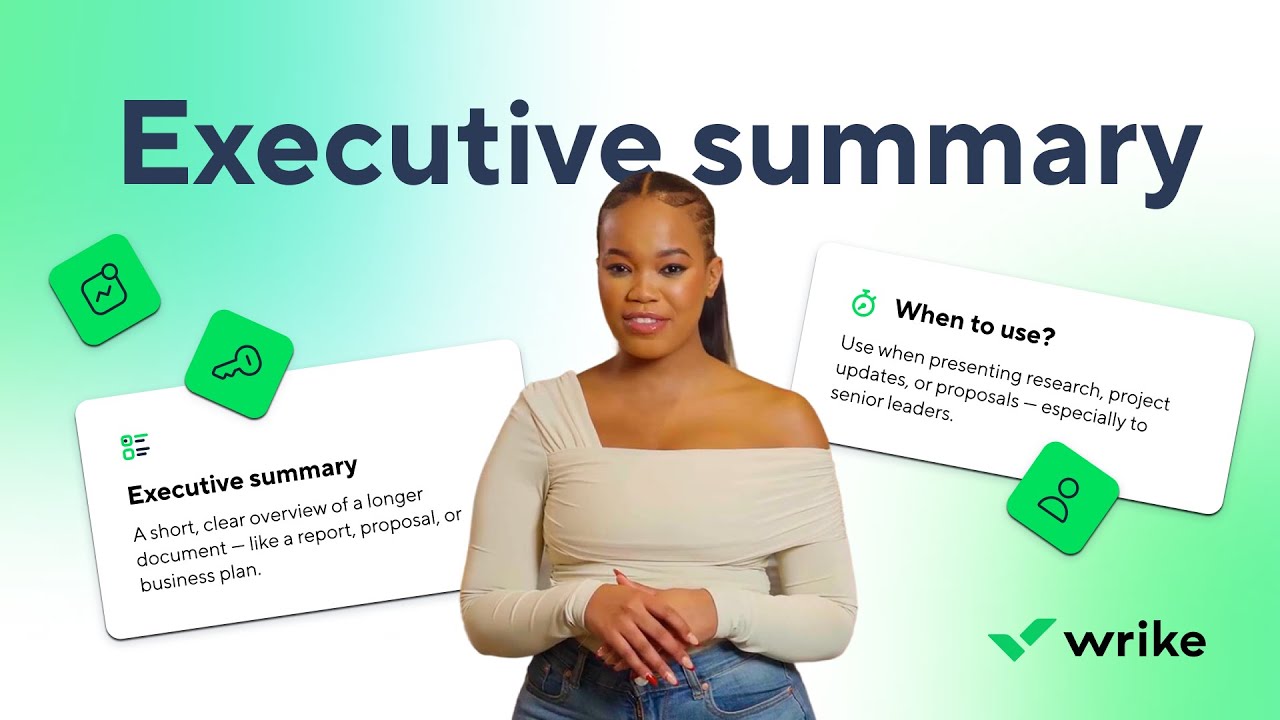
Understanding what is an executive summary is the first step toward creating a document that can make or break a proposal. It is a critical, condensed overview of a longer business document, such as a report, business plan, or project proposal. It’s designed to give busy decision-makers and stakeholders a quick understanding of the key findings, analyses, and recommendations. Mastering how to write a compelling executive summary can be the key to securing funding, gaining project approval, and ensuring your main points are understood by your target audience, making it the most important section of your report.

What is an Executive Summary and Why is it Crucial for Your Business?
An executive summary, at its core, is a standalone section that encapsulates the essence of a much longer document. It is the first, and sometimes only, part of your report that a busy executive will read. Therefore, its ability to convey the most critical information concisely and persuasively is paramount. It serves as a high-level overview, providing key takeaways and essential details to help leaders quickly grasp the document’s purpose and value without reading the entire text.
At LIEN MMO, where we specialize in AI tools and SaaS services for affiliate marketing, we consistently see how a powerful executive summary acts as a gateway to deeper engagement with our proposals and reports.
Defining the Core Purpose of an Executive Summary
The primary purpose of an executive summary is to distill complex information into a brief, easily digestible format. It’s not just about shortening the content; it’s about strategically presenting the most vital points to capture the reader’s attention. For busy stakeholders like investors, managers, and board members, this summary saves valuable time by allowing them to understand the main arguments and outcomes quickly, enabling informed decision-making.
Think of it as the “elevator pitch” for your document. It should be compelling enough to make the reader want to dive into the full report for more details.
The Strategic Importance of an Executive Summary for Decision-Makers
For decision-makers, an executive summary is an indispensable tool. In fast-paced business environments, executives are inundated with lengthy documents. A well-crafted summary provides them with the strategic insight needed to make timely and informed choices without getting bogged down in details. It frames the problem, presents the proposed solution, and highlights the potential impact, making it a crucial element for persuasion and engagement.
An effective summary encourages action, whether it’s approving a project, supporting a new initiative, or investing in a business plan. It’s the first impression of your entire document, and it often determines whether the rest of the report gets read at all.
Executive Summary vs. Abstract: A Key Distinction for Professionals
While both an executive summary and an abstract provide a condensed version of a larger document, their purpose, audience, and structure differ significantly. An abstract is typically found in academic or research papers and offers a short, descriptive overview of the study. Its main goal is to help fellow researchers decide if the full paper is relevant to their work.
An executive summary, however, is geared towards a business audience and is a miniature, standalone version of the entire document. Unlike an abstract, it often includes recommendations and is designed to aid in decision-making. While an abstract summarizes, an executive summary persuades. It can be read in place of the longer document and should provide enough information for a leader to understand the core message and required actions.
The Essential Components of a Powerful Executive Summary
A truly effective executive summary contains several key components that work together to present a comprehensive yet brief overview. These elements ensure that the reader gets a complete picture of the proposal or report, from the initial problem to the final recommendation.
Crafting a Compelling Problem Statement and Solution
Start by clearly identifying the problem or opportunity your document addresses. This sets the stage and immediately tells the reader why your proposal matters. Follow this with a concise description of your proposed solution. This section should directly address the problem, outlining how your approach will solve it effectively and efficiently.
Presenting Key Findings, Analysis, and Conclusions
Summarize the most critical data and analysis from your main document. This isn’t the place for exhaustive detail; instead, focus on the key findings that support your conclusions. Highlight the insights derived from your research or analysis, presenting them as the logical foundation for your subsequent recommendations.
Formulating Clear, Actionable Recommendations
This is arguably the most critical part of the executive summary for decision-makers. Based on your findings and conclusions, what specific actions do you recommend? Recommendations should be clear, direct, and actionable. The reader should understand exactly what steps need to be taken next.
Incorporating a Brief Overview of Financials and Value Proposition
If your document involves a request for funding or has financial implications, include a brief overview of the key numbers. This could be a summary of start-up costs, projected revenue, or the break-even point. Crucially, connect this to your value proposition—clearly state what makes your business or project a worthwhile investment and what sets it apart from the competition.
A How-To Guide: Writing an Executive Summary Step-by-Step
Writing a compelling executive summary requires a structured approach. By following a clear process, you can ensure all essential elements are included and that the final document is persuasive and professional.
Step 1: Understand Your Target Audience (Investors, Managers, Board Members)
Before you write a single word, consider who will be reading the summary. The tone, language, and focus should be tailored to your target audience. Investors will be interested in financial projections and ROI, while project managers might focus more on objectives and timelines. Understanding their priorities is key to crafting a message that resonates.
Step 2: Adhering to the Correct Executive Summary Format and Structure
While the exact format can vary, a typical executive summary follows the structure of the main report. It should begin with an introduction that states the document’s purpose, followed by sections summarizing the problem, the proposed solution, key findings, and finally, conclusions and recommendations. Using headings or bullet points can improve readability for busy executives.
Step 3: Determining the Ideal Length: How Long Should an Executive Summary Be?
Conciseness is critical. A common rule of thumb is that an executive summary should be about 5-10% of the length of the main document. For most reports and business plans, this translates to one to two pages. The goal is to provide all the necessary information for a decision-maker without overwhelming them with unnecessary detail.
Step 4: Proper Placement: Where Does an Executive Summary Go in a Report?
The executive summary is always placed at the beginning of a report or business plan, right after the title page and table of contents. Although it is the first thing your audience reads, we at LIEN MMO recommend that you write it last. Only after you have completed the full report can you accurately summarize its key points and conclusions.
Step 5: Writing and Refining with a Professional Tone (APA Format Considerations)
Maintain a professional, confident, and objective tone throughout. Use clear and direct language, avoiding jargon whenever possible. For documents in academia or certain formal business contexts, adhering to a specific style like the APA format may be required. While the APA manual doesn’t have a unique format for executive summaries, they are generally cited like a report, and the formatting should align with the rest of the document for consistency.
Practical Applications and Winning Executive Summary Examples
To better illustrate these principles, let’s look at a few examples tailored to different business needs.
Example 1: Executive Summary for a Business Plan Seeking Funding
Project: “ConnectAI” – An AI-powered customer service SaaS platform.
Problem: Small e-commerce businesses struggle to provide 24/7 customer support, leading to lost sales and poor customer satisfaction.
Solution: ConnectAI offers an affordable, easy-to-integrate chatbot that handles 80% of customer inquiries instantly, freeing up human agents for complex issues.
Market Analysis: The target market is over 1 million small e-commerce stores in North America, with the market for AI chatbots projected to grow by 25% annually.
Financials & Ask: We project reaching $2M in ARR by Year 3 with a 70% gross margin. We are seeking $500,000 in seed funding for product development and market entry, in exchange for a 15% equity stake.
Example 2: Executive Summary for a Project Proposal in Project Management
Project: “Website Redesign & SEO Overhaul”
Objective: To increase organic website traffic by 40% and lead generation by 25% within 12 months.
Problem: The current company website is outdated, not mobile-friendly, and ranks poorly for key search terms, resulting in missed business opportunities.
Proposed Solution: A complete website redesign focusing on user experience (UX) and mobile-first design, coupled with a comprehensive SEO strategy targeting high-intent keywords.
Key Actions & Timeline: The project will be completed in 4 phases over 6 months: Discovery & Strategy (Month 1), Design & Development (Months 2-4), SEO Implementation (Months 4-5), and Launch & Monitoring (Month 6).
Recommendation: We recommend immediate approval of the project budget of $75,000 to capitalize on current market trends and gain a competitive edge.
Example 3: A Brief Template for a Research Paper or Report
Introduction/Purpose: This report analyzes the impact of remote work policies on employee productivity and retention in the tech industry post-2020.
Methods: The study involved surveying 500 employees from 20 different tech companies and analyzing company performance data over a three-year period.
Key Findings: Companies with flexible remote work policies saw a 15% increase in self-reported productivity and a 20% decrease in employee turnover compared to those with strict in-office mandates.
Conclusion: The data strongly suggests that flexible work arrangements provide a significant competitive advantage in talent acquisition and retention.
Recommendation: It is recommended that the board review and revise the current return-to-office policy to incorporate a more flexible hybrid model.
Pro Tips for Writing an Executive Summary That Gets Results
Beyond the structure and components, a few professional tips can elevate your executive summary from good to great.
Use Clear, Concise Language and Avoid Jargon
Your goal is clarity. Avoid overly technical terms or industry-specific jargon that your audience may not understand. Use strong, active verbs and keep sentences short and to the point. The summary should be accessible to a broad audience of stakeholders.
Focus on Strategic Insight and the Bottom Line
Decision-makers are focused on results. Don’t just summarize information; provide strategic insight. Explain the “so what” behind your data and findings. Emphasize how your recommendations will benefit the organization, focusing on the bottom line and long-term value.
Ensure it Functions as a Stand-Alone Document
The most critical test of an executive summary is whether it can be understood on its own. A reader should be able to grasp the entire scope of your proposal—the problem, solution, evidence, and recommendations—without ever having to read the full report. This is vital for busy executives who may only have time for this section.
Revise and Proofread Meticulously for Impact
Typos and grammatical errors can undermine your credibility. After writing your summary, revise it multiple times for clarity, conciseness, and impact. It’s often helpful to have a colleague who is unfamiliar with the project read it to ensure it makes sense and is persuasive.
In essence, a well-crafted executive summary is more than just a summary; it’s a strategic tool that can determine the success of your entire document. By focusing on clarity, conciseness, and the needs of your audience, you can create a powerful overview that captures attention, conveys critical information, and persuades stakeholders to act. It is the first, and sometimes only, chance to make your case, making its mastery essential in the business world.
Ready to create an executive summary that commands attention? Download our free business plan template and executive summary slide examples to get started!