
An executive summary of a report is the most critical section of any business document, acting as a standalone overview that empowers busy decision-makers to grasp key findings and recommendations instantly. It’s not just a summary; it’s a strategic tool designed to drive action and secure buy-in. A well-crafted executive summary respects the reader’s time, communicates the core message with impact, and ensures your report achieves its intended purpose, whether it’s for a business plan, project proposal, or research paper.

Why Your Executive Summary is the Most Important Page in Your Report
In a world of information overload, attention is a scarce resource. For executives, project managers, and investors, time is money. They rarely have the bandwidth to read a fifty-page report from cover to cover. The executive summary is often the first and sometimes the only part they read to make a critical decision. This makes it the high-stakes gateway to the rest of your document.
The Core Purpose: Driving Decisions, Not Just Summarizing Information
The fundamental purpose of an executive summary is not merely to condense information but to facilitate decision-making. It should be persuasive, highlighting the significance of the report’s content and guiding the reader toward a specific conclusion or action. Think of it as an elevator pitch for your entire report; it needs to be compelling enough to make stakeholders want to learn more or, better yet, approve your recommendations on the spot.
How it Differs from an Introduction or an Abstract
It’s common to confuse an executive summary with an introduction or an abstract, but they serve distinct functions.
- Introduction: An introduction sets the scene. It provides background, states the report’s purpose, and outlines the structure. It’s designed to lead the reader into the report.
- Abstract: Typically found in academic and research reports, an abstract is a short, technical overview of the paper’s content, including its methodology, results, and conclusions. Its audience is primarily other researchers.
- Executive Summary: This is a miniature version of the report itself, created for a business audience. Unlike an abstract, it focuses on the business implications, key findings, and actionable recommendations, and it can be read as a stand-alone document to understand the full picture.
The Strategic Benefits: Saving Time, Aligning Stakeholders, and Securing Approval
A powerful executive summary delivers tangible benefits. It saves valuable time for senior management by presenting the most critical information upfront. This efficiency helps align all stakeholders—from board members to project managers—by providing a shared, high-level understanding of the situation. Ultimately, by clearly articulating the problem, solution, and potential impact, a persuasive summary significantly increases the chances of securing approval for your proposal or project.
The Key Components of a Persuasive Executive Summary
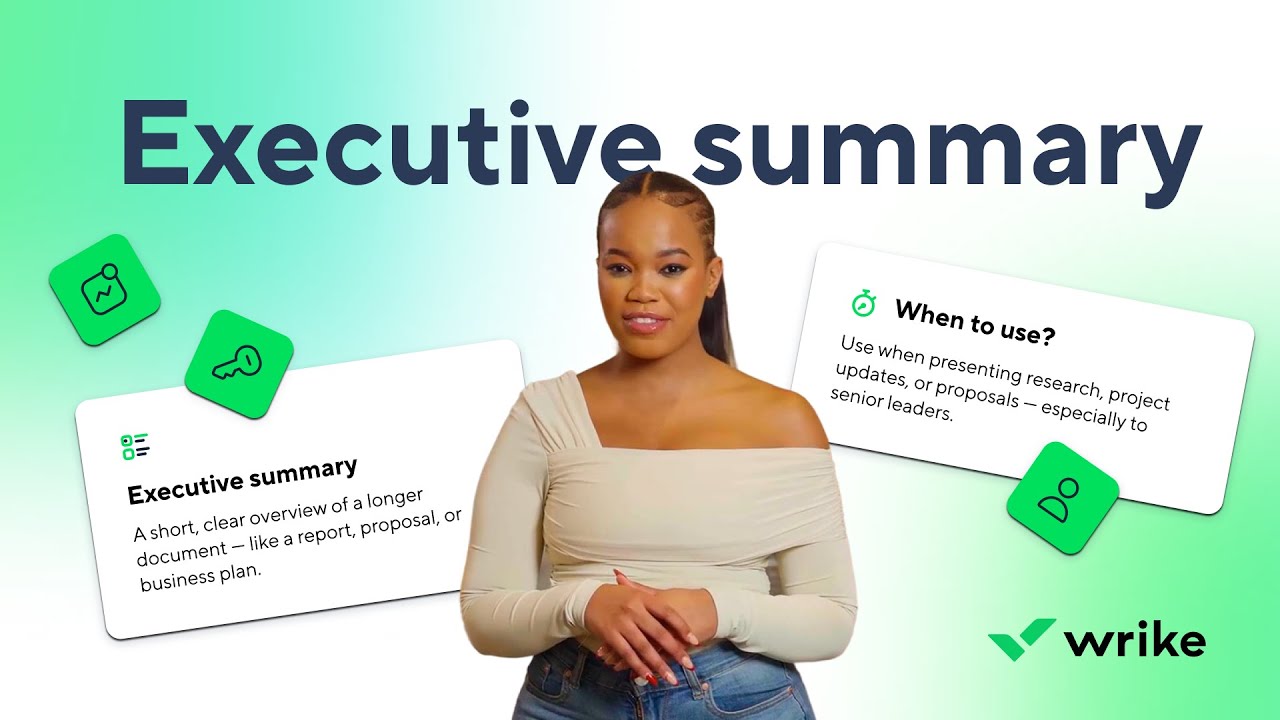
To be effective, an executive summary must follow a logical structure that tells a complete story. At LIEN MMO, we advise clients to include these five essential components to create a compelling narrative that resonates with decision-makers.
Start with the Problem: Clearly Define the Core Challenge or Opportunity
Begin by stating the problem or opportunity your report addresses. Be direct and clear. Why was this report created? What critical issue does it solve? This immediately establishes relevance and grabs the reader’s attention by tapping into their primary pain points. A well-defined problem statement sets the stage for the solutions you’re about to present.
Present the Solution: State Your Main Proposal or Key Findings
After defining the problem, present your core solution or the main findings of your analysis. This is the “what” of your report. Avoid getting bogged down in details. State your primary conclusion or overarching proposal directly. This section should give the reader an immediate sense of the report’s direction and value.
Provide Justification: Back It Up with Essential Data and Analysis
Here, you briefly explain the “why” behind your solution. Summarize the most critical data, market analysis, or key insights that support your main findings. This is not the place for exhaustive data dumps but for a few powerful data points or facts that validate your proposal and build credibility. Data-driven insights are crucial for a business executive audience.
Outline Key Recommendations: Provide Clear, Actionable Next Steps
Decision-makers need to know what to do next. This section should list your key recommendations in a clear and actionable format. Use a numbered list or bullet points for readability. Each recommendation should be a logical consequence of the data and analysis you’ve presented, providing a clear path forward.
Conclude with the Potential Impact: Summarize the Expected Outcome and Benefits
End on a strong, forward-looking note. What is the expected outcome if your recommendations are implemented? Summarize the benefits, such as increased revenue, cost savings, improved efficiency, or strategic alignment with business goals. This final part reinforces the value of your proposal and leaves a lasting, persuasive impression.
A Step-by-Step Guide to Writing an Executive Summary for Maximum Impact
Writing an effective executive summary is a skill. It requires you to think like an executive and prioritize information ruthlessly. Follow these steps to craft a summary that commands attention.
Step 1: Understand Your Audience (Investors, Board Members, Project Managers)
Before you write a single word, know who you’re writing for. The tone and focus of your summary should be tailored to your audience. Investors will care most about financial performance and ROI. Board members will focus on strategic alignment and risk. Project managers will want to see clear objectives and deliverables.
Step 2: Write the Full Report First to Ensure Accuracy
You cannot summarize a document that doesn’t exist yet. Writing the full report first ensures that your summary is an accurate and complete representation of the content. This process allows you to fully develop your arguments, analysis, and recommendations before attempting to distill them.
Step 3: Identify and Extract the Most Critical Information
With the full report complete, go through each section and identify the absolute must-know information. Look for the core problem statement, the most compelling data, the primary conclusions, and the most important recommendations. These are your key takeaways and the building blocks of your summary.
Step 4: Draft the Summary with a Clear, Logical Flow
Organize the extracted points into the five key components discussed earlier: problem, solution, justification, recommendations, and impact. Write a first draft that connects these points into a coherent narrative. Focus on telling a clear and compelling story, not just listing facts.
Step 5: Refine for Clarity, Conciseness, and a Persuasive Tone
The final step is to edit ruthlessly. Eliminate jargon, redundant phrases, and unnecessary details. Every sentence should serve a purpose. Refine your language to be persuasive and confident. Read it aloud to check for flow and impact. The final product should be a polished, high-impact document.
Best Practices and Common Mistakes to Avoid
Mastering the executive summary means embracing best practices and steering clear of common pitfalls that can undermine your report’s effectiveness.
How Long Should an Executive Summary Be? (The 5-10% Rule)
A widely accepted guideline is that an executive summary should be about 5-10% of the length of the main report. For a 20-page report, this means 1-2 pages. For a 100-page business plan, it could be up to 10 pages. However, the ultimate goal is conciseness; provide all necessary information without overwhelming the reader.
Tips for Professional Formatting: Using Bullet Points and Bold Text for Readability
Busy readers scan documents. Use formatting to your advantage.
- Headings and Subheadings: Break up the text and guide the reader.
- Bullet Points: Use them to list key findings or recommendations for quick comprehension.
- Bold Text: Emphasize the most critical data points or conclusions.
A clean, well-organized format makes your summary more inviting and easier to digest.
Avoiding Jargon and Overly Technical Language
Your audience may not have the same technical expertise as you. Avoid industry jargon, acronyms, and overly complex language. The goal is to communicate clearly and quickly. If a technical term is unavoidable, provide a brief, simple explanation. Clarity builds trust and ensures your message is understood.
The Pitfall of Copy-Pasting vs. True Summarization
One of the biggest mistakes is simply copying and pasting sentences from the main report. An executive summary is not a collection of excerpts; it is a newly written, synthesized overview. It requires you to re-articulate the core ideas in a more concise and integrated way, ensuring a smooth and logical flow from start to finish.
Practical Examples and a Ready-to-Use Template
To help you apply these principles, here are some condensed examples and a universal template.
Example 1: Executive Summary for a Business Report
- Problem: Q3 sales for Product X have declined by 15%, missing targets due to increased market competition.
- Solution/Finding: Our analysis indicates a shift in consumer preference towards eco-friendly packaging, an area where our main competitor excels.
- Justification: A consumer survey of 1,000 customers showed that 65% would switch brands for sustainable packaging.
- Recommendation: We recommend an immediate investment of $50,000 to redesign Product X’s packaging using recyclable materials, with a projected launch in Q1.
- Impact: This initiative is projected to recapture a 10% market share within six months, generating an estimated $250,000 in new revenue.
Example 2: Executive Summary for a Project Proposal
- Opportunity: There is a strategic opportunity to streamline our internal communications by implementing a unified project management platform.
- Proposed Solution: We propose the adoption of the “Connect-All” SaaS platform to replace the three separate tools currently in use (email, chat, and task lists).
- Justification: This will reduce software subscription costs by 30% and, based on a pilot program, is expected to decrease project completion times by an average of 20%.
- Recommendation: We request approval for a budget of $120,000 for a one-year enterprise license and company-wide implementation.
- Impact: The project will deliver an estimated ROI of 150% in the first year through cost savings and productivity gains.
Example 3: Executive Summary for a Research Report
- Problem: This report investigates the root causes of the 25% increase in employee turnover over the past fiscal year.
- Key Finding: The primary driver of turnover is a perceived lack of professional development opportunities, cited by 72% of departing employees in exit interviews.
- Justification: Our data shows a direct correlation between teams with low training budgets and high attrition rates.
- Recommendation: We recommend implementing a formal mentorship program and allocating an additional $75,000 annually to the professional development budget.
- Impact: These measures are expected to reduce turnover by 15% in the next year, saving an estimated $400,000 in recruitment and training costs.
A Universal Executive Summary Word Template
For a more detailed structure, you can use a professional executive summary word template. It provides a fill-in-the-blanks format that ensures you cover all the critical sections in a clear and organized manner.
Mastering the executive summary is essential for any professional seeking to influence decision-makers and drive results. By focusing on the core problem, solution, and recommendations, and tailoring the message to the audience, you transform a simple report into a powerful tool for strategic alignment. This concise, high-impact document ensures your key insights are not just read, but understood and acted upon, making it the true engine of your report.
Ready to create an executive summary that commands attention and drives decisions? At LIEN MMO, we specialize in helping businesses communicate their value effectively. Contact us at lienmmo@gmail.com for personalized guidance on your next big report.